A 12-volt air compressor uses your vehicle’s electrical system for power, while a battery-powered compressor runs from its own rechargeable battery. A 12V model often works better for repeated or longer inflation jobs. A cordless model usually wins for portability and quick tire top-ups. However, actual performance depends heavily on airflow, duty cycle, tire size, and compressor design.
In this guide, I’ll compare both compressor types in practical terms. We’ll look at speed, runtime, tire sizes, portability, cold-weather use, maintenance, and overall value.
Key Takeaways
- 12V compressors draw electricity directly from your vehicle.
- Battery-powered compressors provide true cordless portability.
- A 12V compressor is not automatically faster than cordless models.
- Duty cycle can limit how long either compressor runs.
- Large tires need strong airflow and sustained compressor performance.
- Cordless models are convenient for cars, bikes, and motorcycles.
- Heavy-duty 12V units often suit trucks and RVs better.
- Dual-power compressors provide both cordless and vehicle-powered operation.
12-Volt vs Battery-Powered Air Compressor: Quick Comparison
Both compressor types can handle everyday tire maintenance. However, their strengths become clearer when you compare them side by side.
| Feature | 12-Volt Air Compressor | Battery-Powered Air Compressor |
| Power source | Vehicle 12V electrical system | Rechargeable lithium-ion battery |
| Portability | Limited by cord and hose length | Completely cordless |
| Runtime | Depends mainly on duty cycle | Depends on battery and duty cycle |
| Inflation speed | Varies greatly between models | Varies greatly between models |
| Car tire top-ups | Excellent | Excellent |
| Multiple tires | Usually very good | Depends on battery capacity |
| Truck tires | Strong models work very well | High-output models can work well |
| RV tires | Heavy-duty models are preferable | Only suitable high-output models |
| Cold-weather readiness | No internal compressor battery required | Battery performance may decline |
| Dead vehicle battery | Usually cannot operate | Still works if charged |
| Storage | Easy vehicle storage | Battery needs occasional checking |
| Typical price | Often lower | Usually higher |
| Best advantage | Reliable vehicle-powered operation | Maximum portability |
Neither design wins every category. Your vehicle and inflation habits matter more.
What Is the Difference Between a 12V and Battery-Powered Air Compressor?
A 12V air compressor receives power from your vehicle. Most small models plug into the 12V accessory socket. You may still hear this called the cigarette lighter socket.
Larger 12V compressors may connect directly to the battery terminals. They usually use alligator clamps instead of the accessory socket.
That distinction matters.
A vehicle accessory socket can only provide limited electrical current. Heavy-duty compressors often need more power than that socket safely supplies.
A battery-powered compressor works differently. It carries its own rechargeable power source. Some models have a permanent internal battery. Others accept removable power-tool batteries.
That makes cordless compressors independent from your vehicle.
You can walk to another car, trailer, motorcycle, or bicycle. You do not need to stretch a power cord behind you.
Technically, your vehicle is also powered by a battery. However, throughout this guide, “battery-powered” means a cordless compressor with its own rechargeable battery.
How Does Each Type Get Its Power?
The power source affects convenience, runtime, storage, and emergency usefulness. It can also affect how much electrical power reaches the compressor.
How a 12-Volt Air Compressor Gets Power
Most portable 12V compressors use one of two connections.
The first is the vehicle accessory outlet. You simply plug the compressor into the socket.
These units are convenient for everyday passenger vehicles. However, the outlet limits available electrical current.
The second type connects directly to the vehicle battery. These compressors generally support larger motors and higher electrical loads.
Direct-battery units are common for trucks, off-road vehicles, and RVs.
Your engine may need to remain running during operation. Follow the compressor manufacturer’s directions for your specific model.
How a Cordless Battery-Powered Compressor Gets Power
Cordless compressors usually use lithium-ion batteries.
Smaller handheld models may include a built-in battery. You recharge the entire compressor through its charging port.
Larger units often use removable power-tool batteries.
These can offer considerably stronger performance than tiny handheld inflators. They are also useful if you already own compatible batteries.
Some cordless compressors work within larger tool ecosystems. That can reduce your overall purchase cost.
What About Dual-Power Air Compressors?
Dual-power compressors combine both approaches.
They may run from a rechargeable battery during normal use. If that battery dies, you can connect the compressor to vehicle power.
That makes them attractive for road trips and emergencies.
However, dual-power models usually cost more. They can also be heavier than basic cordless compressors.
12V vs Battery-Powered Air Compressor: The Main Differences
The power source gets most of the attention. In practice, several other differences matter just as much.
Inflation Speed and Airflow
Inflation speed depends largely on how much air moves.
Manufacturers may list airflow as CFM or liters per minute. Higher airflow can shorten inflation time.
However, airflow usually changes as tire pressure increases.
A compressor may move air quickly at low pressure. Its airflow may decrease significantly near higher pressures.
That is why maximum PSI alone tells you very little.
Actual tire inflation tests are more useful.
Look for tests showing:
- Tire size
- Starting pressure
- Final pressure
- Total inflation time
These numbers make meaningful comparison much easier.
Runtime and Duty Cycle
This is one of the most misunderstood differences.
A 12V compressor can receive electricity continuously from your vehicle. That does not mean its motor can run continuously.
Compressors generate considerable heat.
Many portable models have a specified duty cycle. This tells you how long the compressor should run before cooling.
For example, a compressor may need a cooling break after several minutes.
Battery-powered compressors can have similar thermal limitations.
Therefore, distinguish between available electrical power and allowable compressor runtime.
The vehicle may still have electricity available. The compressor itself may need cooling.
Battery Capacity and Number of Tires Per Charge
Cordless compressors have another limitation: stored battery energy.
Runtime depends on several factors:
- Battery capacity
- Tire size
- Starting pressure
- Target pressure
- Outdoor temperature
- Compressor efficiency
- Battery age
A small battery may handle several quick top-ups easily.
The same battery could struggle with several completely low truck tires.
Avoid choosing solely from advertisements claiming a specific number of tires.
Those numbers may use smaller tires or minor pressure increases.
Portability and Cord Reach
Cordless models clearly have an advantage here.
You simply carry the compressor to the tire.
This is convenient when:
- Helping another vehicle
- Inflating trailer tires
- Working around a campsite
- Inflating motorcycle tires
- Maintaining bicycles
- Reaching awkward valve stems
A 12V compressor stays connected to your vehicle.
That means cord length matters.
The compressor needs enough reach for every tire. This becomes especially important with long trucks and RVs.
Size and Storage Space
Portable compressors vary greatly in size.
Tiny cordless inflators may fit inside a glove compartment. Tool-battery compressors are usually larger.
Small 12V units can also remain very compact.
Heavy-duty 12V compressors may require considerably more storage space. They often include longer hoses and battery cables.
For an RV or truck, that extra size may be worthwhile.
For a small sedan, compactness may matter more.
Noise and Heat
Neither type is automatically quieter.
Noise depends mostly on motor design, pump construction, and housing.
Heat also depends strongly on the compressor design.
Small compressors frequently become hot during extended operation. This is normal within reasonable limits.
However, excessive heat may activate thermal protection.
Always follow the manufacturer’s recommended operating and cooling intervals.
Gauge Accuracy and Automatic Shutoff
Many modern compressors include digital pressure gauges.
Cordless models frequently include programmable automatic shutoff. You enter your target PSI and start inflation.
The compressor stops when it reaches that setting.
Many 12V models offer the same feature.
However, gauge accuracy can vary between compressors.
It is still useful to confirm pressure using a dependable tire gauge.
Is a 12V Air Compressor More Powerful Than a Battery-Powered One?
Not necessarily.
This is one of the most important things to understand.
A cheap 12V compressor may have a small motor. A premium cordless tool-battery model can easily outperform it.
Likewise, a heavy-duty 12V compressor connected directly to your vehicle battery may outperform many cordless models.
The power source alone does not determine performance.
Several factors matter more:
- Motor size
- Pump design
- Airflow
- Electrical current
- Battery output
- Duty cycle
- Cooling system
- Target pressure
Think of “12V versus cordless” as one specification.
It should not be your only specification.
Why Maximum PSI Does Not Tell You Which Compressor Is Better
Maximum PSI looks impressive on packaging. Unfortunately, it can also be misleading.
A compressor rated for 150 PSI is not necessarily fast.
It simply means the compressor can theoretically reach high pressure.
For vehicle tires, airflow usually matters much more.
Specs That Matter More Than Advertised PSI
- Airflow: Shows how much air the compressor moves.
- Inflation time: Shows real-world operating speed.
- Duty cycle: Shows how long it can safely run.
- Current draw: Helps determine appropriate electrical connections.
- Tire-size rating: Indicates intended vehicle applications.
- Hose length: Affects reach around larger vehicles.
- Gauge accuracy: Helps prevent incorrect tire pressure.
- Thermal protection: Protects the compressor from overheating.
- Auto shutoff: Adds convenience during routine top-ups.
When comparing compressors, look beyond the largest number printed on the box.
Which One Works Better for Different Tire Sizes?
Tire size changes everything. A small bicycle tire requires very little air. A large truck or RV tire needs considerably more.
| Application | 12V Compressor | Battery-Powered Compressor | Better General Choice |
| Passenger car top-up | Excellent | Excellent | Cordless for convenience |
| Very low passenger tire | Excellent | Good to excellent | Model-dependent |
| SUV tires | Excellent | Good to excellent | Either |
| Pickup truck tires | Excellent with proper model | Strong models work well | Model-dependent |
| Large off-road tires | Heavy-duty models excel | High-output models only | Usually heavy-duty 12V |
| Travel trailer tires | High-duty-cycle model preferred | Selected models work | Usually 12V |
| Motorhome tires | Heavy-duty direct-battery model | Limited choices | Usually heavy-duty 12V |
| Motorcycle tires | Good | Excellent | Battery-powered |
| Bicycle tires | Works but inconvenient | Excellent | Battery-powered |
| Sports balls | Good | Excellent | Battery-powered |
Do not choose based only on the vehicle category.
Check your tire pressure requirements and actual tire size.
Which Is Better for Cars and Everyday Tire Top-Ups?
For an ordinary passenger car, either type works well.
Your decision mostly comes down to convenience.
A cordless compressor is easier when a tire drops several PSI. Grab it, connect the hose, set your pressure, and inflate.
There is no vehicle cord to manage.
That makes cordless models attractive for regular tire-pressure checks.
A small 12V compressor can accomplish exactly the same task. It may also remain ready inside your trunk for years.
You do not need to remember charging another battery.
Whichever compressor you use, inflate tires to the vehicle manufacturer’s recommended pressure.
Check the sticker inside the driver’s door area.
Do not simply inflate tires to the maximum PSI printed on their sidewall.
For the most consistent reading, check pressure when the tires are cold.
Which Is Better for Trucks, SUVs, and RVs?
Bigger tires contain considerably more air. That changes what you should prioritize when choosing a compressor.
Trucks and Large SUVs
Truck tires require more air volume than passenger-car tires.
This makes airflow and duty cycle especially important.
A powerful cordless compressor can handle many pickup tires comfortably.
However, tiny handheld inflators may become slow or overheat.
For frequent truck use, choose a compressor specifically rated for larger tires.
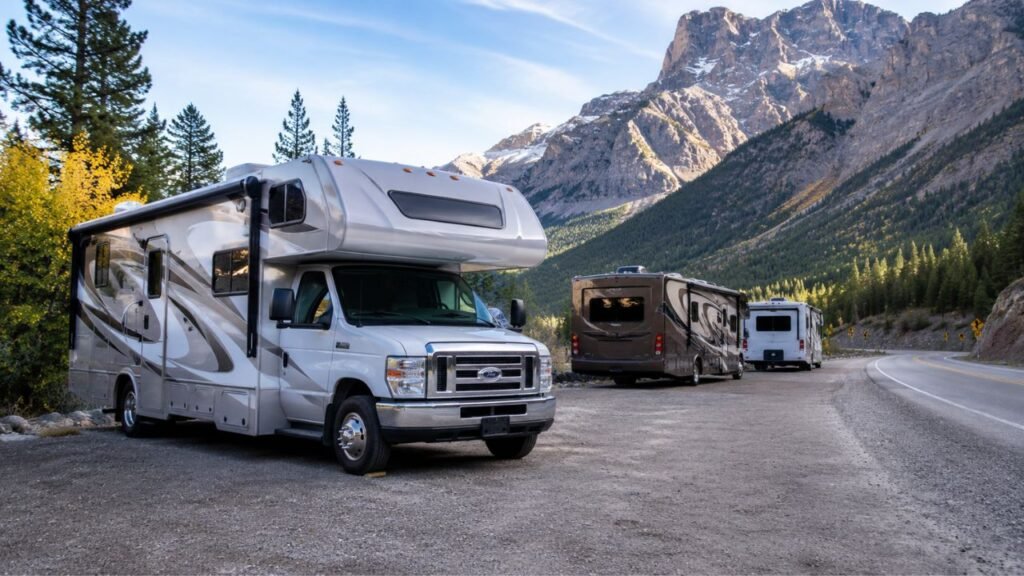
RV and Travel Trailer Tires
RV owners should pay special attention to sustained operation.
You may need to inflate several tires during one maintenance session.
Some trailer and motorhome tires also operate at higher pressures.
A heavy-duty 12V compressor often makes sense here.
Direct-battery models can provide strong airflow for repeated inflation.
Long hose reach is also useful.
Motorhomes with dual rear wheels can make valve access particularly challenging.
A longer air hose can simplify the entire job.
Cordless compressors can still work for RVs.
Just make sure the manufacturer supports your tire size and pressure range.
Off-Road and Overlanding Tires
Off-road driving creates a different workload.
Many drivers intentionally reduce tire pressure before entering rough terrain.
They then reinflate every tire before returning to pavement.
That is a much larger job than adding two PSI.
For frequent airing up, a high-output compressor becomes more important.
Heavy-duty 12V systems are popular because they can provide sustained vehicle-powered operation.
Large cordless compressors can also work.
Battery capacity becomes critical when inflating four oversized tires repeatedly.
How Do They Compare in Cold Weather?
Cold weather affects both tire pressure and portable equipment. Battery-powered compressors need a little more attention during winter.
Battery-Powered Compressor in Cold Weather
Lithium-ion batteries generally provide less available performance when extremely cold.
That may reduce:
- Runtime
- Inflation speed
- Available battery capacity
This does not mean cordless compressors suddenly become useless.
It simply means a nearly depleted battery becomes more concerning during winter.
Keeping the compressor properly charged helps significantly.
Follow the manufacturer’s temperature recommendations for storage and charging.
12V Compressor in Cold Weather
A 12V compressor does not rely on its own rechargeable lithium battery.
Instead, it pulls electricity from the vehicle.
That can make long-term winter emergency storage simpler.
However, your vehicle battery must still have enough power.
Cold temperatures also place additional stress on vehicle batteries.
Which Should You Keep in the Car During Winter?
A 12V compressor is easy to leave inside the vehicle.
There is no internal compressor battery requiring regular charging.
A cordless unit is equally useful when properly maintained.
You simply need to check its battery occasionally.
For maximum backup, a dual-power compressor can offer both options.
What Happens If Your Car Battery Is Dead?
This is one area where cordless compressors have a clear advantage.
Most 12V compressors depend entirely on vehicle electricity.
If the vehicle battery is completely dead, the compressor may not operate.
A charged cordless compressor remains independent.
You can still inflate a tire without starting the vehicle.
That can be helpful during roadside emergencies.
However, remember what a compressor actually does.
It adds air.
It cannot repair:
- Large punctures
- Sidewall damage
- Bead damage
- Broken valve stems
- Major air leaks
If air immediately escapes, inflating alone will not solve the problem.
Which Is Easier to Keep Ready for an Emergency?
Both can make excellent emergency tools.
Their readiness requirements are simply different.
12V Emergency Advantages
- No compressor battery needs charging.
- It can stay inside the vehicle.
- Vehicle power provides operating energy.
- Strong models handle repeated inflation.
- Long-term storage is relatively simple.
Battery-Powered Emergency Advantages
- Works independently from the vehicle.
- No power cord needs routing.
- Setup is extremely quick.
- You can carry it to another vehicle.
- It works well around trailers and motorcycles.
- Many models include built-in lights.
For roadside use, I would prioritize reliability over convenience.
Choose something capable of handling your actual tire size.
How Much Maintenance Does Each Type Need?
Portable compressors are relatively simple tools. A few basic habits can keep either type reliable much longer.
Maintaining a 12V Compressor
Inspect the power cord periodically.
Look for damaged insulation or loose connections.
Check the air hose for cracking or leaks.
If your compressor uses battery clamps, inspect those connections too.
Keep the compressor intake free from dust and debris.
Most importantly, respect the duty cycle.
Repeated overheating can shorten compressor life.
Maintaining a Cordless Compressor
The compressor itself needs similar care.
The biggest difference is battery maintenance.
Recharge the battery periodically.
Do not leave it completely discharged for long storage periods.
Avoid prolonged exposure to extreme heat whenever possible.
If the battery is removable, keep its contacts clean.
Eventually, rechargeable batteries lose capacity.
A replaceable battery makes long-term ownership much easier.
12V vs Battery-Powered Air Compressor: Cost Over Time
Purchase price tells only part of the story. Battery replacements and existing tool systems can change long-term value.
| Cost Factor | 12V Compressor | Battery-Powered Compressor |
| Initial cost | Often lower | Usually higher |
| Separate compressor battery | Not required | Required |
| Charger | Not required | Usually required |
| Replacement battery | Not applicable | May eventually be needed |
| Existing tool battery | Not relevant | Can lower purchase cost |
| Long-term storage upkeep | Low | Moderate |
| Heavy-duty options | More expensive | More expensive |
| Battery degradation | Not an issue | Possible over time |
Cordless pricing becomes more attractive when you already own compatible batteries.
For example, you may only need the bare compressor tool.
Someone starting from scratch may need both battery and charger.
That can increase the total purchase price considerably.
Are Battery-Powered Compressors Better for Bikes and Sports Equipment?
For bikes and sports equipment, cordless usually makes more sense.
You are not tied to a vehicle.
That means you can carry the compressor into:
- Garages
- Campgrounds
- Bicycle trails
- Parks
- Sports fields
- Backyards
Just make sure you use the correct adapter.
A tire compressor is also different from a high-volume inflatable pump.
Air mattresses and large pool floats need high airflow at low pressure.
A tire compressor focuses on higher pressure with lower air volume.
Using one on a large mattress can be painfully slow.
Some combination inflators include separate high-volume outlets.
Those models are much better for recreational inflatables.
What Features Should You Compare Besides the Power Source?
The power source should only be the beginning of your comparison.
Look at these features before buying:
- Real-world inflation time
- CFM or LPM airflow
- Compressor duty cycle
- Maximum operating pressure
- Recommended tire size
- Digital gauge accuracy
- Automatic shutoff
- Air hose length
- Power cord length
- Battery capacity
- Built-in or removable battery
- Availability of replacement batteries
- 12V backup input
- Direct battery-clamp connection
- Thermal overload protection
- Built-in work light
- Carrying case
- Valve adapters
- Warranty coverage
A properly sized compressor is more important than choosing one power source.
Are Dual-Power Air Compressors Better Than Either Type Alone?
Dual-power compressors solve one of the biggest cordless problems.
You can use battery power for quick jobs.
If the battery becomes depleted, you can switch to vehicle power.
That makes them particularly useful for road trips.
They also provide flexibility around multiple vehicles and trailers.
However, there are trade-offs.
Dual-power compressors can cost more.
They may also weigh more and require extra cables.
If you only inflate car tires occasionally, that added complexity may be unnecessary.
For frequent travelers, the backup power option can be worthwhile.
12V or Battery-Powered Compressor: Which Should You Choose?
The easiest way to decide is to match the compressor to your normal inflation jobs. Think about tire size, frequency, portability, and available power.
Choose a 12V Air Compressor If…
- The compressor will stay inside one vehicle.
- You regularly take long road trips.
- You inflate several tires at once.
- You own larger truck or trailer tires.
- You do not want another rechargeable battery.
- Sustained inflation matters more than portability.
- You want a heavy-duty direct-battery compressor.
Choose a Battery-Powered Air Compressor If…
- Portability is your biggest priority.
- You mainly perform quick tire top-ups.
- You use it for motorcycles or bicycles.
- You need inflation away from your vehicle.
- You already own compatible power-tool batteries.
- You want independent emergency operation.
- You prefer fast setup without power cords.
Consider a Dual-Power Compressor If…
- You want cordless operation most of the time.
- You also want vehicle power as backup.
- You travel frequently.
- You inflate different types of tires.
- You do not mind paying more for flexibility.
Final Verdict
A 12V compressor and a battery-powered compressor can both be excellent choices. The right one depends more on your tire size and usage than the power source alone.
For everyday passenger-car maintenance, a cordless compressor is hard to beat. It is quick to grab, easy to move, and convenient for small pressure adjustments.
For trucks, RVs, repeated tire inflation, and long road trips, a properly sized 12V compressor often makes more sense. Vehicle power removes concerns about exhausting a small rechargeable battery.
Still, do not assume every 12V compressor is stronger.
Compare airflow, duty cycle, tire-size ratings, hose reach, and real inflation times. Those specifications tell you much more than the words “12V” or “battery-powered.”
Related FAQs
Is a 12V Air Compressor Better Than a Battery-Powered One?
A 12V compressor is usually better for long or repeated inflation jobs, while a battery-powered model is better for portability. Neither type is automatically superior because actual performance depends on airflow, duty cycle, motor design, and tire size.
Are Cordless Tire Inflators Powerful Enough for Car Tires?
Yes. Most quality cordless tire inflators can easily handle normal passenger-car tire top-ups. Higher-output cordless models can also inflate very low tires, SUVs, and some truck tires when their specifications match the required tire size.
Can a Battery-Powered Air Compressor Inflate a Completely Flat Tire?
Many battery-powered compressors can inflate a completely flat car tire. However, inflation takes longer than a small top-up and uses considerably more battery. Larger truck or RV tires may require a more powerful cordless model.
Can a 12V Air Compressor Drain a Car Battery?
Yes, a 12V compressor can discharge a vehicle battery if operated long enough without the engine running. Many manufacturers recommend running the engine during inflation, but you should always follow the instructions supplied with your compressor.
Should You Run the Engine While Using a 12V Air Compressor?
Many 12V compressor manufacturers recommend operating the compressor with the vehicle engine running. This helps maintain electrical voltage and reduces battery discharge. Always check your compressor manual because operating requirements can vary between models.
How Long Can a 12V Air Compressor Run Continuously?
Continuous runtime depends on the compressor’s duty cycle. Some portable models require cooling after several minutes, while heavy-duty compressors can operate much longer. Vehicle power availability does not remove the compressor’s heat limitations.
How Long Does a Cordless Air Compressor Battery Last Per Charge?
Battery runtime varies with battery capacity, tire size, pressure increase, temperature, and compressor efficiency. Several small tire top-ups may use little energy, while inflating multiple large tires from very low pressure can drain a battery much faster.
Can You Use a Battery-Powered Air Compressor on Truck Tires?
Yes, provided the compressor is designed for truck tires. Larger tool-battery compressors can handle many pickup tires effectively. Small handheld cordless inflators may take too long or reach their thermal limits on large truck tires.
Can a Cordless Air Compressor Inflate RV Tires?
Some high-output cordless compressors can inflate RV tires, but you need to check maximum pressure, airflow, duty cycle, and tire-size recommendations carefully. For repeated RV use, a heavy-duty 12V compressor is often more practical.
Does a Higher PSI Rating Mean a Faster Air Compressor?
No. Maximum PSI tells you the highest pressure the compressor can produce. It does not indicate inflation speed. Airflow, motor performance, tire volume, starting pressure, and duty cycle have a much greater effect on actual inflation time.
Is CFM More Important Than PSI for a Tire Inflator?
CFM is often more useful when comparing inflation speed because it measures airflow. However, you still need enough pressure capability for your tires. The best comparison considers airflow, target PSI, duty cycle, and tested inflation time together.
Are Dual-Power Tire Inflators Worth It?
Dual-power inflators can be worthwhile for frequent travelers because they provide cordless convenience with vehicle-powered backup. They cost more than basic inflators, so occasional users may not benefit enough to justify the extra expense.
Can You Leave a Battery-Powered Air Compressor in Your Car?
You can store many cordless compressors inside a vehicle, but extreme temperatures can affect lithium-ion batteries. Follow the manufacturer’s storage recommendations and check the battery periodically so the compressor remains ready when needed.
Which Is Better for Roadside Emergencies: 12V or Cordless?
A cordless compressor offers faster setup and works even when vehicle power is unavailable. A 12V compressor offers dependable vehicle-powered operation for longer jobs. For emergency use, the best choice is whichever model reliably handles your vehicle’s tire size.

Ethan Walker writes about travel routes, outdoor exploration, and road-based adventures. His guides focus on simple planning, dependable gear, and realistic travel advice. He values comfort, safety, and practical experience over hype.