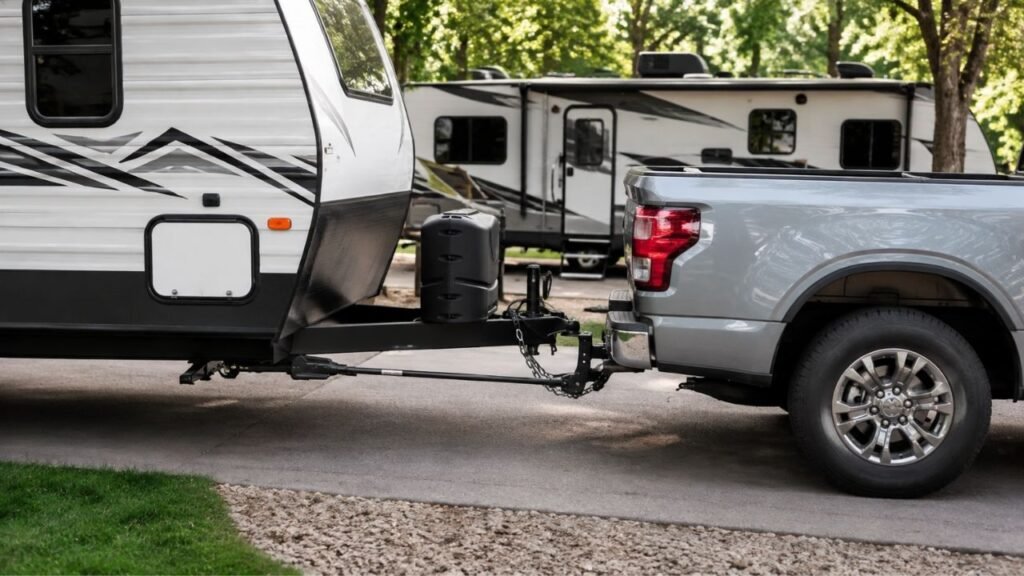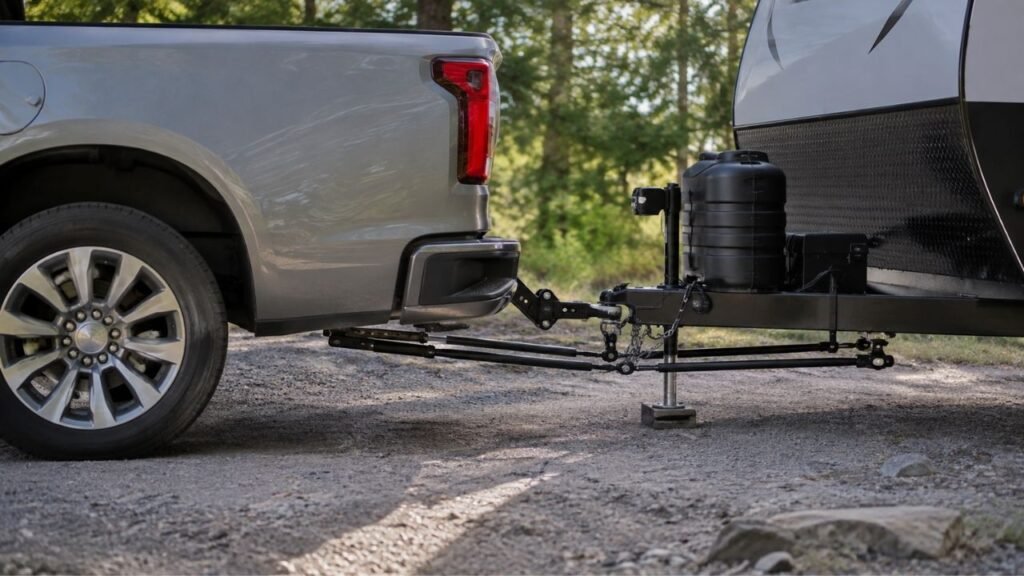
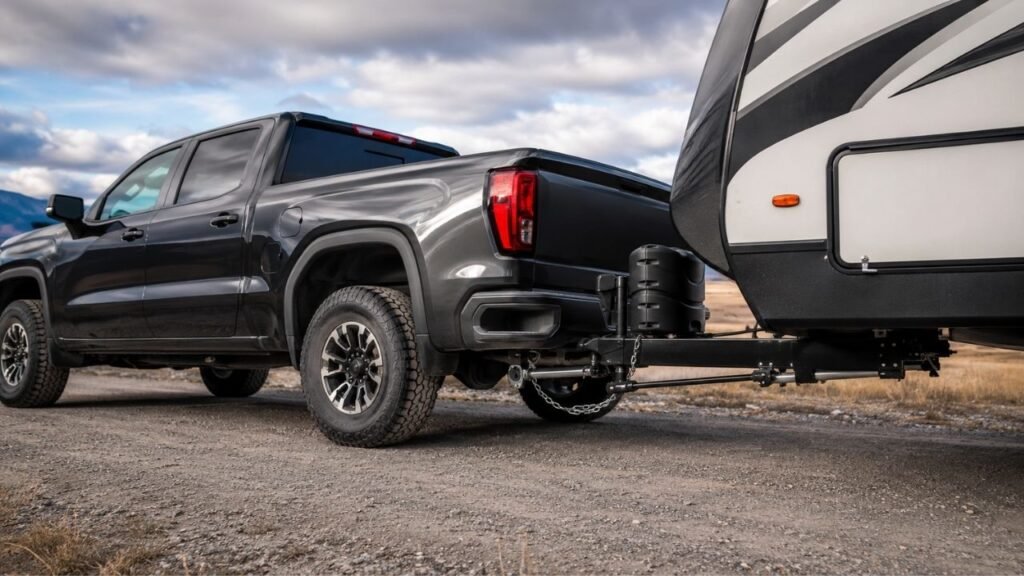
Your truck can still sag with a weight distribution hitch because the hitch does not remove tongue weight. It only redistributes part of that load toward the truck’s front axle and trailer axles. Excessive sag usually points to improper hitch adjustment, high tongue weight, incorrect spring bars, heavy truck cargo, or limited suspension capacity.
In this guide, I’ll help you figure out what is happening. We’ll check your measurements, hitch setup, trailer loading, payload limits, and suspension before you start replacing parts.
Key Takeaways
- Some rear suspension compression can be completely normal while towing.
- A WDH should restore front axle loading, not eliminate every inch of sag.
- Measure your truck before adjusting spring bars or hitch-head angle.
- High loaded tongue weight can cause significant rear-end compression.
- Incorrect spring-bar ratings can prevent proper weight distribution.
- Airbags can reduce squat but cannot increase truck payload capacity.
- Never exceed your truck, hitch, axle, receiver, or tire ratings.
Is It Normal for a Truck to Sag With a Weight Distribution Hitch?
Yes, a small amount of rear-end sag can still be normal. Your truck’s rear suspension continues carrying part of the trailer’s tongue weight.
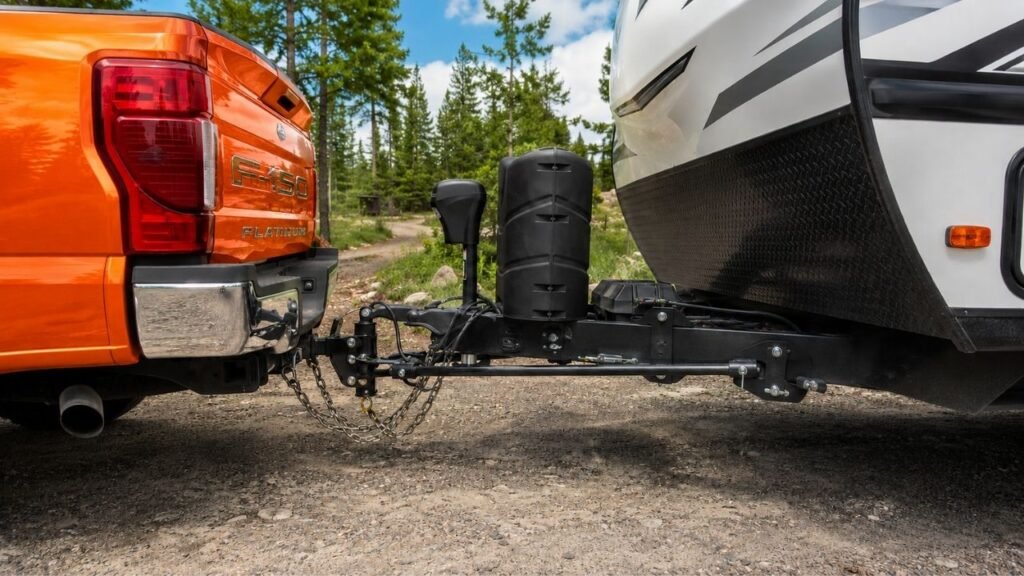
A weight distribution hitch does not make tongue weight disappear. Instead, its spring bars use leverage to redistribute some load.
That means your rear suspension may remain slightly compressed after adjustment.
The important question is not whether your truck looks perfectly level. You need to know whether enough weight returned to the front axle.
If your front end remains noticeably higher than its unloaded position, something may need adjustment.
On the other hand, your rear can sit lower while the WDH remains properly adjusted.
Suspension design also affects how much visible squat you see. A comfort-focused half-ton truck may compress more than a heavy-duty pickup.
That does not automatically mean the lighter truck is overloaded.
You need measurements and actual weights before making that conclusion.
Check the Front of the Truck Before Judging Rear Sag
Rear sag catches your eye first, but the front matters more. Measuring the front suspension tells you whether your WDH is actually transferring enough weight.
Measure the Truck With the Trailer Disconnected
Start on flat and reasonably level pavement.
Load the truck as you normally would for a trip. Include passengers, tools, coolers, hitch equipment, and bed cargo.
Measure vertically from the ground through the center of the front wheel. Continue up to a consistent point on the wheel opening.
Write this number down.
You can also measure the rear wheel opening for comparison. However, use your truck manufacturer’s recommended WDH procedure when available.
Measure With the Trailer Coupled and WDH Disengaged
Next, couple the trailer to your truck without engaging weight distribution.
The trailer’s tongue weight should push the rear downward. At the same time, the truck’s front end usually rises.
Measure the front again using the exact same reference point.
The difference shows how much the tongue weight unloaded your front axle.
For example, suppose your unloaded front measurement was 38 inches. After coupling the trailer, it rises to 39 inches.
Your front suspension has risen one inch.
Measure Again With Weight Distribution Engaged
Now engage your spring bars using the normal hitch procedure.
Measure the front wheel opening again.
The front should move back toward its original unloaded position. How far it should return depends on your truck manufacturer.
Avoid assuming that the front must return exactly to its starting height.
Some manufacturers specify partial front axle load restoration. Others provide different procedures for specific suspension systems.
Use your tow vehicle owner’s manual as your primary guide.
Compare the Result With the Manufacturer’s Target
This step prevents one of the most common WDH mistakes.
Do not continue increasing spring-bar tension simply because your rear looks low.
Your goal is proper weight distribution, not cosmetic leveling.
If your front reaches the manufacturer’s target, additional rear squat may come from normal suspension compression.
If the front remains too high, the WDH may need more adjustment.
What Your Truck Measurements Are Telling You
Your measurements can quickly narrow down the problem. Use the table below before changing spring bars, head tilt, or suspension parts.
| What You Notice | What It May Mean | What to Check Next |
| Rear drops and front remains high | WDH may be under-adjusted | Spring-bar tension and head adjustment |
| Rear drops but front reaches target | Some rear compression may be normal | Payload and axle weights |
| Front drops below its unloaded position | WDH may be over-adjusted | Reduce weight distribution |
| Heavy sag remains with strong spring-bar tension | Tongue weight or payload may be excessive | Weigh the truck and trailer |
| Trailer sits nose-high or nose-low | Hitch ball height may be incorrect | Shank and ball height |
| Sag increases after loading camping gear | Tongue weight or truck cargo changed | Reweigh the setup |
| Airbags level the truck but front remains high | Suspension is level, but WDH may still need adjustment | Recheck front measurements |
Use this table as a starting point rather than a final diagnosis.
Several problems can happen at the same time.
Why Your Truck Still Sags With the Weight Distribution Hitch
Several issues can leave your truck sitting lower than expected. I recommend checking them in order instead of randomly increasing spring-bar tension.
The Weight Distribution Hitch Is Under-Adjusted
An under-adjusted WDH does not transfer enough load forward.
The truck’s rear may stay heavily compressed while the front remains elevated.
Depending on your hitch design, additional weight distribution may require:
- Increasing hitch-head tilt
- Changing spacer washers
- Raising L-brackets
- Changing the number of chain links under tension
- Adjusting another manufacturer-specific tension mechanism
Do not make several adjustments at once.
Change one setting, reconnect everything, and measure again.
That approach helps you understand what each adjustment actually changes.
Your Loaded Tongue Weight Is Higher Than Expected
Many trailer owners use brochure tongue weight when selecting their hitch.
Unfortunately, brochure numbers usually describe an unloaded trailer.
Once you prepare for camping, tongue weight can increase substantially.
Common additions include:
- Propane cylinders
- Trailer batteries
- Food and drinking water
- Camping equipment
- Front storage cargo
- Tools
- Aftermarket equipment
- Fresh water, depending on tank location
A conventional travel trailer often performs best with roughly 10% to 15% tongue weight.
However, always follow your trailer manufacturer’s requirements.
Too much tongue weight increases load on your truck’s rear suspension.
It can also consume available payload faster than expected.
Your Spring Bars Are Rated Too Light
Spring bars need enough capacity for your actual towing configuration.
Bars selected around an unrealistically low tongue weight may struggle to transfer sufficient load.
Remember that the hitch itself also adds weight behind your truck.
Cargo placed in the truck bed can further affect the towing setup.
If your loaded tongue weight exceeds the spring bars’ working range, adjusting them harder may not solve the problem.
You may need correctly rated bars or a different WDH system.
Do not automatically choose the heaviest bars available, though.
Bars that are unnecessarily stiff can create a harsh towing experience.
Match the system to your actual measured load.
The Hitch Head Angle Is Incorrect
Head angle affects spring-bar leverage on many traditional WDH systems.
If the head is not tilted correctly, the bars may lack sufficient preload.
You can tighten them repeatedly and still get disappointing weight transfer.
Some hitches use washers to establish head angle. Others use serrated washers, pins, spacers, or built-in adjustment mechanisms.
Follow the instructions for your exact hitch.
Do not copy another owner’s washer count from an online discussion.
Two similar trailers can still need different settings.
The Hitch Ball Height Is Wrong
A trailer should usually tow level or very close to level.
If the ball sits too high, the trailer may tow nose-high.
If the ball sits too low, the trailer may point downward.
Either condition can complicate your measurements and weight distribution.
Measure from the ground to the trailer coupler while level.
Then compare that measurement with your hitch ball height.
Adjust the shank position if necessary.
Do this before spending hours trying to correct sag with spring-bar tension.
Too Much Weight Is Behind the Truck’s Rear Axle
Your trailer is not the only thing loading the rear suspension.
Heavy cargo placed near the tailgate creates additional leverage behind the rear axle.
Common examples include:
- Portable generators
- Toolboxes
- Firewood
- Coolers
- Bikes
- Fuel containers
- Camping equipment
Moving appropriate cargo farther forward can reduce rear suspension loading.
However, do not overload the front axle either.
You still need to stay within every vehicle rating.
Your Truck Is Running Out of Payload Capacity
Tow rating gets plenty of attention, but payload often becomes the limiting factor first.
Your available payload must handle far more than trailer tongue weight.
It also includes:
- Driver
- Passengers
- Truck-bed cargo
- Hitch hardware
- Accessories
- Trailer tongue weight
Check the payload information on your truck’s door-jamb label.
Then compare your actual loaded condition with GVWR and axle ratings.
A truck may technically tow a heavy trailer yet exceed payload first.
A WDH cannot increase the payload number printed for your vehicle.
Your Truck Has a Soft Rear Suspension
Some pickups are designed to provide a smoother unloaded ride.
Their suspension may compress noticeably when tongue weight is added.
This is especially common with certain half-ton trucks and off-road-oriented models.
A softer suspension does not automatically mean your WDH is failing.
If front axle restoration is correct and all ratings remain satisfied, some rear compression may simply reflect suspension design.
This is why visual appearance alone cannot diagnose the problem.
Worn or Modified Suspension Is Increasing the Sag
Your truck’s suspension condition also matters.
Sag can become more noticeable when the vehicle has:
- Weak or damaged springs
- Worn suspension components
- Lift kits
- Leveling kits
- Modified rear blocks
- Nonstandard suspension geometry
A leveling kit deserves special attention.
Many trucks leave the factory with the rear slightly higher than the front.
Leveling the front removes some of that visual rake.
Once you attach a trailer, normal rear compression may suddenly look dramatic.
The truck may appear severely nose-high even with moderate suspension movement.
Air Suspension or Automatic Leveling Is Affecting Your Setup
Automatic leveling can make WDH adjustment confusing.
The truck may raise or lower itself while you take measurements.
That changes the relationship between your hitch and spring bars.
Some vehicles require a specific sequence when setting weight distribution.
For example, you may need to disable automatic leveling temporarily. Other systems require the suspension to complete its leveling cycle first.
Follow your vehicle owner’s manual carefully.
Do not use a generic WDH setup procedure if your truck requires something different.
How to Fix Excessive Truck Sag With a Weight Distribution Hitch
Now you know the likely causes, you can troubleshoot systematically. Work through these steps instead of immediately buying airbags or heavier spring bars.
1. Load the Truck and Trailer Like a Real Trip
Set up both vehicles exactly as you normally tow them.
Add your usual passengers, propane, batteries, camping gear, and truck-bed cargo.
If you normally travel with fresh water, include that too.
Your WDH needs adjustment for the actual towing condition.
Adjusting an empty trailer can give misleading results.
2. Measure the Actual Loaded Tongue Weight
Do not rely only on the trailer manufacturer’s dry specification.
Use an appropriate tongue-weight scale or weighing method.
Knowing your actual number helps you choose the correct spring bars.
It also tells you whether your trailer loading needs attention.
3. Verify Truck Payload and Axle Ratings
Check your door-jamb labels and owner’s manual.
Confirm your:
- GVWR
- Front GAWR
- Rear GAWR
- Available payload
- Tire load ratings
- Receiver ratings
If you exceed a rating, additional WDH tension is not the solution.
You need to reduce or redistribute weight appropriately.
4. Confirm Your Spring-Bar Rating
Compare your measured towing load with the hitch manufacturer’s specifications.
The bars should operate within their intended range.
If your tongue weight exceeds their rating, replace them with suitable components.
Do not combine mismatched hitch parts unless the manufacturer approves them.
5. Check Front-Axle Restoration
Repeat your three measurements.
Measure the truck unloaded, coupled without distribution, and coupled with distribution.
Then compare the result with your vehicle manufacturer’s target.
This tells you whether more spring-bar leverage is actually needed.
6. Increase Weight Distribution Only When Needed
If measurements confirm under-distribution, adjust the hitch gradually.
Depending on the system, you might change:
- Head tilt
- Washer count
- Chain position
- L-bracket height
- Spring-bar tension setting
Make small adjustments and measure afterward.
Do not keep adding tension until the truck simply looks level.
7. Correct Ball Height and Trailer Attitude
Stand back and check the trailer once everything is connected.
The trailer should generally sit level or follow its manufacturer’s guidance.
If it points noticeably upward or downward, correct the ball height.
You may need to move the adjustable shank up or down.
Recheck weight distribution after changing hitch height.
8. Recheck the Setup When Your Load Changes
Your WDH adjustment is based on your load.
Adding heavy batteries, a generator, bikes, water, or front-storage cargo can change tongue weight.
That means your previously correct setup may no longer be correct.
Measure again after major loading changes.
Should the Truck Be Completely Level After Adjusting the WDH?
No. Your truck does not necessarily need to sit perfectly level after weight distribution is applied.
A small amount of rear squat may remain.
Instead of chasing a perfectly level body, focus on proper front axle restoration.
Also make sure the trailer attitude is correct and every weight rating remains satisfied.
A truck can look level while still being improperly adjusted.
For example, airbags may raise the rear without restoring enough weight to the front axle.
That is why measurements matter more than appearance.
How Much Rear Sag Is Too Much?
There is no universal number of inches that defines excessive truck sag.
Different trucks have different spring rates, unloaded rake, wheelbases, suspension designs, and manufacturer requirements.
Instead of relying on a fixed rear-fender measurement, look for warning signs.
These may include:
- The front end remains noticeably elevated.
- Steering feels unusually light or vague.
- Headlights point much higher than normal.
- Rear suspension sits near the bump stops.
- Rear axle ratings approach their limits.
- Tires are overloaded.
- The WDH cannot meet front restoration requirements.
- The truck handles poorly despite proper hitch adjustment.
If those symptoms appear, stop focusing on appearance.
Measure and weigh your towing setup before continuing.
Can Too Much Tongue Weight Cause Sag Even With a WDH?
Yes. Excessive tongue weight can cause substantial rear suspension compression even with a properly installed WDH.
The common mistake is loading too much cargo near the trailer’s front.
Watch for heavy items such as:
- Batteries
- Propane cylinders
- Front-mounted toolboxes
- Cargo in front storage compartments
- Equipment placed ahead of the trailer axles
Moving some appropriate cargo closer to the trailer axles can reduce tongue weight.
However, do not move excessive weight behind the axles just to lift your truck.
Too little tongue weight can make a trailer unstable.
Always maintain the trailer manufacturer’s recommended balance.
Can a Weight Distribution Hitch Increase My Truck’s Payload Capacity?
No. A weight distribution hitch cannot increase your truck’s rated payload capacity.
The hitch redistributes some load across the tow vehicle and trailer.
It does not change the manufacturer’s GVWR, axle ratings, payload rating, receiver rating, or tire capacity.
This distinction is extremely important.
Suppose your truck has 1,500 pounds of payload available.
A WDH does not turn that into 1,800 pounds.
If passengers, cargo, hitch equipment, and tongue weight exceed your available payload, you need to reduce weight or use a properly rated tow vehicle.
Never use hitch adjustments to hide an overloaded truck.
Should I Add Airbags or Helper Springs If My Truck Still Sags?
Suspension helpers can reduce remaining rear compression, but they solve a different problem. First confirm that your WDH, tongue weight, payload, and axle loading are correct.
When Airbags May Help
Airbags can help when your truck remains within all weight ratings.
They may also help when front axle restoration is already correct.
In that situation, remaining sag may simply come from softer rear springs.
Adjustable airbags can provide additional rear suspension support.
They may improve ride height when carrying varying loads.
However, they still do not increase payload capacity.
When Helper Springs May Help
Progressive helper springs can provide additional support as the rear suspension compresses.
They can be useful for trucks that frequently carry heavy bed cargo while towing.
Some designs require little maintenance once installed.
They may also reduce excessive suspension movement under load.
Again, they should support a properly rated truck.
They should never be used to justify overloading it.
When Suspension Helpers Are the Wrong Fix
Airbags or helper springs are not your first solution when:
- The truck exceeds payload.
- Tongue weight is excessive.
- Spring bars are underrated.
- The WDH is under-adjusted.
- Trailer loading is incorrect.
- Hitch height is wrong.
- The receiver is overloaded.
Correct those problems first.
Otherwise, suspension helpers can make an unsafe setup look better without fixing it.
Do Airbags Replace a Weight Distribution Hitch?
Generally, no.
Airbags support the rear suspension and change ride height.
A WDH transfers part of the trailer’s tongue load across the towing combination.
Those are different jobs.
Airbags can raise the truck’s rear while the front axle remains improperly unloaded.
If your towing setup requires weight distribution, airbags are not a substitute.
Don’t Make These WDH Adjustments Just to Eliminate Sag
A low-looking rear end can tempt you into over-adjusting everything. Avoid these common mistakes while troubleshooting:
- Do not keep tightening spring bars until the truck looks perfectly level.
- Do not force the front suspension below its proper target.
- Do not install heavier spring bars only because they appear stronger.
- Do not use airbags to disguise an overloaded rear axle.
- Do not move excessive trailer cargo behind the axles.
- Do not copy another person’s chain-link or washer settings.
- Do not ignore the tow vehicle’s WDH instructions.
- Do not assume every air-suspension truck uses the same setup procedure.
Small adjustments are much easier to evaluate.
Measure after each meaningful change.
A Better Way to Confirm Your Setup: Weigh the Rig
Wheel-well measurements are useful, but actual axle weights provide better information. If your truck still looks wrong after careful adjustment, a scale can help confirm what is happening.
Weigh the Truck by Itself
Load the truck as you would for travel.
Drive onto a certified vehicle scale without the trailer attached.
Record your front and rear axle weights.
These numbers provide your real towing baseline.
Weigh With the Trailer Attached but WDH Disengaged
Couple the loaded trailer but leave the spring bars disengaged.
Record the axle weights again.
You can now see how much the tongue load changed your front and rear axles.
The front usually becomes lighter while the rear gains substantial load.
Weigh With the Weight Distribution Engaged
Engage your WDH normally and weigh everything again.
Compare all three measurements.
The WDH should restore an appropriate amount of load to the front axle.
Some load should also transfer toward the trailer axles.
Then compare your final numbers with:
- Truck GVWR
- Front GAWR
- Rear GAWR
- Trailer axle ratings
- Tire ratings
- Receiver limits
- Combined weight ratings where applicable
This is far more useful than deciding whether the truck “looks right.”
When You Should Stop Adjusting and Get Professional Help
Most WDH problems can be corrected with careful measurements and proper setup. However, some situations deserve professional inspection.
Get help if:
- Severe sag remains after correct adjustment.
- Spring bars cannot achieve proper front restoration.
- The truck regularly reaches its rear bump stops.
- Hitch or receiver components appear bent.
- The trailer cannot be made level.
- Actual tongue weight exceeds hitch capacity.
- Truck payload or axle ratings are exceeded.
- The vehicle handles poorly after proper adjustment.
- You are unsure whether suspension modifications changed hitch geometry.
A qualified hitch installer or towing specialist can weigh the setup and inspect the hardware.
That is often safer than repeatedly adjusting components without knowing the real cause.
Final Words
Your truck can still sag slightly even when your weight distribution hitch works correctly.
The key is determining whether the remaining sag is normal suspension compression or a sign of poor weight distribution.
Start with front suspension measurements. Then confirm loaded tongue weight, spring-bar rating, payload, hitch height, and trailer loading.
If everything is within specification, some rear squat may simply be normal for your truck.
Only consider airbags or helper springs after the WDH and vehicle loading are already correct.
Related FAQs
Does a Weight Distribution Hitch Completely Eliminate Truck Sag?
No. A WDH redistributes part of the trailer’s tongue load, but the rear suspension still carries weight. Some rear compression can remain even when the hitch is adjusted correctly.
Why Does My Truck Sag More After Loading the Travel Trailer for a Trip?
Camping gear, propane, batteries, water, and front-storage cargo can increase loaded tongue weight. That additional tongue weight pushes harder on your truck’s rear suspension and may require WDH readjustment.
Can I Tighten My Weight Distribution Bars to Raise the Rear of My Truck?
You can increase spring-bar tension when measurements show insufficient weight distribution. However, do not tighten them only to make the truck level because excessive tension can over-adjust the front axle.
What Happens If My Weight Distribution Hitch Is Under-Adjusted?
An under-adjusted WDH leaves too much load concentrated on the truck’s rear axle. The front may remain elevated, steering may feel lighter, and the rear suspension may sag more than expected.
Can a Weight Distribution Hitch Be Too Tight?
Yes. Excessive weight distribution can push the truck’s front suspension lower than intended and create poor handling. Always adjust the hitch according to vehicle and hitch manufacturer instructions.
How Do I Know If My WDH Spring Bars Are Too Light?
Your bars may be underrated if actual loaded tongue weight exceeds their specified range or proper front axle restoration cannot be achieved despite correct hitch adjustment.
Does Tongue Weight Still Count Against Payload With a Weight Distribution Hitch?
Yes. A WDH does not eliminate tongue weight or increase the truck’s payload rating. You must still account for passengers, cargo, hitch equipment, and trailer tongue weight.
Will Airbags Fix Sag While Towing a Travel Trailer?
Airbags can reduce rear suspension compression, but they cannot correct excessive tongue weight, increase payload, or replace proper WDH adjustment. Address those issues before adding suspension support.
Can I Use Airbags and a Weight Distribution Hitch Together?
Yes, many towing setups can use both when the vehicle manufacturer allows it. Set them up carefully because changing rear ride height can affect WDH geometry and adjustment.
Should I Adjust My WDH Again After Adding Cargo or Water?
Yes, substantial loading changes can alter tongue weight and trailer attitude. Recheck your measurements whenever you add heavy cargo, batteries, water, bikes, or other equipment.
Why Does My Half-Ton Truck Sag More Than a Heavy-Duty Truck?
Many half-ton trucks use softer rear suspension for improved unloaded comfort. Heavy-duty pickups generally use stiffer suspension designed to carry larger payloads with less visible compression.
Does a Leveling Kit Make Towing Sag Look Worse?
Yes. A leveling kit raises the truck’s front and removes some factory rake. Normal rear suspension compression can therefore make the truck appear more nose-high while towing.

Ethan Walker writes about travel routes, outdoor exploration, and road-based adventures. His guides focus on simple planning, dependable gear, and realistic travel advice. He values comfort, safety, and practical experience over hype.