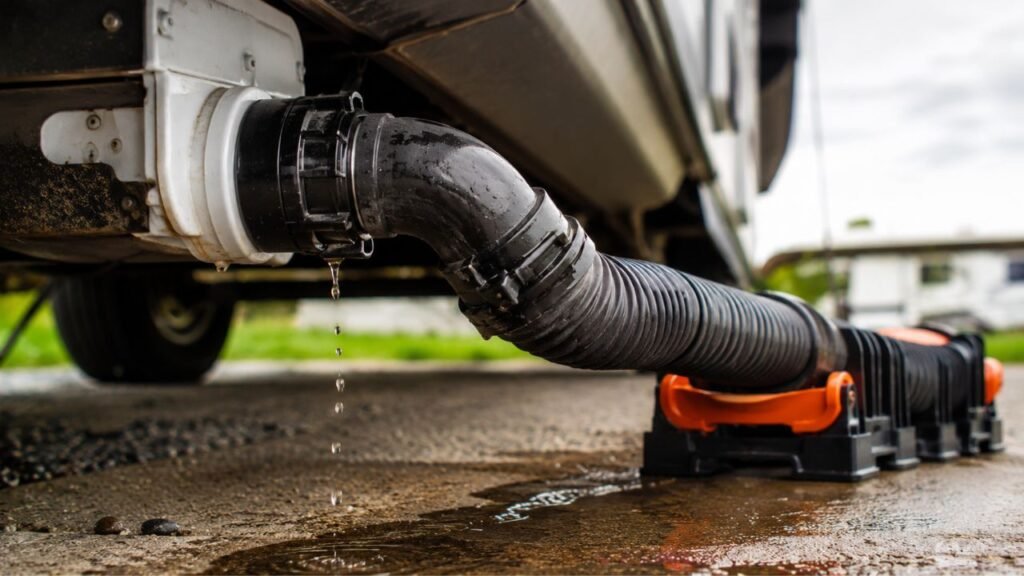
An RV sewer hose usually leaks at the connection because of a worn or missing gasket, an improperly locked bayonet fitting, or a loose hose-to-fitting joint. Cracked fittings, hose strain, and a leaking waste valve can also cause similar dripping.
The good news is that you usually do not need a complete new hose. I’ll help you find the exact leak point, fix the connection safely, and decide whether you need a gasket, fitting, or replacement hose.
Key Takeaways
- Start by finding exactly where wastewater is escaping.
- A worn or missing gasket is a common connection problem.
- Make sure every bayonet fitting is fully twisted and locked.
- Inspect the hose-to-fitting joint if the gasket looks fine.
- Support the hose so its weight does not pull downward.
- Test a repair with a small gray-water release first.
- Waste behind the termination cap may indicate a bad gate valve.
- Replace the hose if its wall is cracked or brittle.
First, Find Exactly Where the Sewer Hose Is Leaking
Before buying anything, watch closely and identify the exact drip point. What looks like one connection actually includes several separate fittings and seals.
| Where You See the Leak | Most Likely Cause | First Thing to Check | Repair or Replace? |
| Hose connection at RV outlet | Worn gasket or loose bayonet | Gasket and locking position | Usually repair |
| Around rotating swivel | Damaged swivel seal or joint | Swivel seam and movement | Depends on damage |
| Where hose enters fitting | Loose collar or damaged hose | Hose-to-fitting attachment | Often repairable |
| Clear elbow | Bad gasket or cracked elbow | Seal and locking tabs | Usually repair |
| Campground sewer inlet | Loose adapter or poor fit | Adapter seating | Usually reposition |
| Hose wall near fitting | Split, pinhole, or abrasion | Accordion folds | Usually replace |
| Behind termination cap | Leaking waste gate valve | Valve seal and closure | Repair valve |
Do not assume the hose itself has failed simply because liquid appears nearby. Starting with the exact leak location can save money and frustration.
What Should You Do Immediately When You Notice a Sewer Leak?
If wastewater starts dripping, stop the flow before inspecting anything. Working on an actively leaking connection usually makes the situation worse.
- Close the black or gray tank valve immediately.
- Keep the hose connected until active flow stops.
- Wear disposable sanitation gloves before handling fittings.
- Keep drinking-water hoses away from sewer equipment.
- Clean any spill according to campground requirements.
- Inspect the connection before reopening either tank valve.
- Test the repaired connection using a small gray-water release.
Avoid disconnecting a fitting while a full black tank is flowing. Even a small connection problem can become a major mess quickly.
Why Is My RV Sewer Hose Leaking Where It Connects to the RV?
The RV-side connection is usually the first place I would inspect. Several small problems here can create very similar symptoms.
The Rubber Gasket or O-Ring Is Worn, Missing, or Twisted
The rubber gasket inside the fitting creates the actual seal. Without it, tightening the connection usually will not stop leaking.
Disconnect the hose with both tank valves closed. Look inside the fitting and confirm that the gasket is present.
Check for:
- Cracks in the rubber
- Flattened edges
- Hard or dried rubber
- Missing sections
- A gasket sitting crooked
- Dirt underneath the gasket
- A gasket that keeps falling from its groove
A healthy gasket should sit evenly inside its groove. It should still feel flexible rather than hard or brittle.
If the gasket has flattened significantly, replace it. These small seals are inexpensive compared with replacing a complete sewer hose.
Make sure the replacement matches your fitting. Similar-looking sewer fittings do not always use identical seals.
The Bayonet Fitting Is Not Fully Locked
Most RV sewer hoses use a twist-lock bayonet connection. Small hooks on the hose fitting slide over lugs on the RV outlet.
If those hooks are only partially engaged, the fitting may appear connected while still leaving a tiny gap.
Disconnect it and inspect the hooks carefully. Then line them up with the outlet lugs and twist firmly into position.
The fitting should feel secure afterward. Give it a gentle pull without forcing anything.
If it slides backward easily, it may not be completely locked.
Do not use excessive force when twisting the fitting. Something may be misaligned or damaged if it refuses to turn.
The Bayonet Hooks or Outlet Lugs Are Damaged
Sometimes the gasket is perfectly fine, but the fitting cannot compress it properly.
Look closely at the plastic hooks and RV outlet lugs.
Watch for:
- Cracked hooks
- Rounded locking edges
- Bent plastic
- Missing pieces
- Excessive looseness after locking
A damaged connector may continue leaking even with a brand-new gasket.
If the sewer hose fitting is replaceable, changing that fitting may solve it. A damaged RV outlet may require replacement of the outlet hardware instead.
Dirt Is Preventing the Seal From Sitting Flat
A surprisingly small amount of debris can break the seal.
Dried waste, toilet paper, grit, hair, or campground dirt can become trapped between the gasket and mating surface.
With both valves closed, remove the fitting and clean the surfaces carefully.
You usually do not need aggressive chemicals. The goal is simply to remove material preventing the seal from sitting evenly.
Reconnect everything afterward and test again.
Why Is It Leaking Where the Hose Meets the Fitting?
A leak behind the bayonet connector points to a different problem. Look carefully at the point where the flexible hose enters the plastic fitting.
The Hose Clamp or Locking Collar Is Loose
Some sewer hoses use a clamp, threaded collar, or locking ring to secure the hose.
Repeated setup and storage can gradually loosen that connection.
If your fitting has a serviceable collar, check whether it has backed off. Make sure the hose is fully seated before tightening it again.
Do not overtighten plastic components. Too much force can crack the fitting and create another leak.
The Hose Has Pulled Partially Out of the Fitting
The first few inches beside the connector endure substantial movement.
Every time you stretch, bend, compress, or store the hose, that area flexes.
Eventually, the flexible hose can begin pulling away from its fitting.
Look for a visible gap around the joint. Also inspect for stretched or distorted hose material.
If your fitting is designed to be removed, reseating the hose may work.
If it is permanently attached, replacement may be more practical.
The Swivel Fitting or Joint Is Damaged
Many RV sewer fittings rotate to make hookup easier. That rotating joint can sometimes become the leak source.
Dry the connection first, then watch carefully during your test.
If liquid appears from the swivel seam rather than the gasket area, replacing the gasket may accomplish nothing.
Some swivel fittings can be rebuilt. Others are sold as complete replacement fittings.
Check the fitting design before attempting to take it apart.
The Fitting May Not Be Serviceable
Not every sewer hose uses removable end fittings.
Some have permanently attached or bonded fittings. If that joint separates or cracks, you may not have a practical way to rebuild it.
Do not start cutting the hose until you know its design.
If the remaining hose is in excellent condition, a compatible repair fitting may work. Otherwise, replacing that hose section is usually simpler.
Why Does My Sewer Hose Leak Only When I Open the Black Tank Valve?
A connection that stays dry until you open the black tank valve is often only partially sealed.
Opening a full black tank sends a heavier surge through the sewer hose. That stronger flow can expose a weak gasket, loose fitting, or damaged connector that seemed fine during setup.
Start by checking the bayonet connection and gasket. Then inspect the hose-to-fitting joint and nearby hose wall.
Hose strain can also contribute. A fitting being pulled downward may hold during light flow but begin leaking when the hose fills.
This is why a small gray-water test can be useful after repairs. It lets you verify the connection before releasing a larger black-tank load.
Can Hose Sagging or Pulling Cause the Connection to Leak?
Yes. A sewer hose should not hang heavily from the RV outlet. Supporting the hose reduces stress on both fittings and improves drainage.
Too Much Hose Weight Is Hanging From the RV Outlet
A long hose can become surprisingly heavy when liquid collects inside.
If that weight hangs directly from the bayonet connector, the fitting gets pulled downward.
That can distort the gasket enough to create a small leak.
Give the first section of hose some support instead of letting everything hang from the RV.
The Hose Has a Deep Low Spot
A deep sag creates a place where wastewater can collect.
The pooled liquid adds weight and may slow drainage. It also keeps more pressure against the upstream fitting.
You do not need the hose perfectly straight. You simply want a gradual downhill path toward the sewer inlet.
Use a Sewer Hose Support
An accordion-style sewer support can keep the hose elevated and sloping properly.
Set the highest point near the RV and gradually lower the support toward the sewer connection.
The support also keeps the hose away from gravel, pavement, and other surfaces that can cause abrasion.
What If the Leak Is at the Clear Elbow or Campground Sewer Connection?
Do not overlook the opposite end of the system. A leak at the campground inlet usually involves the elbow, gasket, adapter, or sewer opening.
Check the Elbow Gasket
Clear sewer elbows often rely on a rubber seal just like RV-side fittings.
Inspect that gasket for:
- Flattening
- Cracking
- Missing sections
- Twisting
- Dirt underneath it
Reseat or replace the gasket when necessary.
Inspect the Clear Elbow for Cracks
Clear plastic makes flow easy to see, but the elbow can still crack.
Check around:
- Locking tabs
- Swivel joints
- Threaded portions
- Molded seams
Hairline cracks may only become obvious while liquid is flowing.
Make Sure the Dump-Station Adapter Is Secure
Campground sewer openings vary.
Some accept threaded adapters. Others rely on tapered or press-fit fittings.
Make sure your adapter sits firmly without excessive wobbling.
If the campground fitting itself is damaged, your equipment may not be the problem.
Secure the Sewer End Before Opening a Tank Valve
Always finish connecting the campground end before opening the black tank valve.
A loose sewer-end connection can shift quickly once heavy wastewater begins moving through the hose.
Could the RV Waste Gate Valve Be Causing the Leak Instead?
Sometimes the hose gets blamed for wastewater that was already leaking before hookup. Check behind the termination cap before assuming the sewer hose has failed.
Check for Liquid Behind the Termination Cap
With both tank valves closed, carefully remove the sewer outlet cap.
If wastewater is already sitting behind that cap, the sewer hose cannot be responsible.
Your waste gate valve may not be sealing completely.
Debris May Be Keeping the Gate Valve Slightly Open
Waste material can sometimes prevent the blade inside the valve from closing fully.
Even a tiny opening can allow liquid to seep toward the termination cap.
Repeatedly forcing the valve handle usually does not solve the underlying problem.
The valve may need cleaning or servicing.
A Worn Valve Seal or Cable Can Prevent Full Closure
The gate valve contains seals that allow the blade to close tightly.
Those seals can wear, move, or become damaged.
Cable-operated valves can also develop adjustment problems that prevent complete closure.
In those situations, replacing the sewer hose will not stop the leak.
When the Gate Valve Needs Professional Attention
Accessing a waste valve can involve removing underbelly panels or working near wastewater plumbing.
If the valve is inaccessible or badly damaged, professional service can be the cleaner option.
That is especially true when the repair requires disassembling loaded waste plumbing.
How Do You Fix a Leaking RV Sewer Hose Connection?
Once you locate the leak, work through the connection methodically. This sequence helps avoid replacing good parts unnecessarily.
- Close both tank valves completely.
- Put on disposable sanitation gloves.
- Allow trapped liquid inside the hose to drain.
- Disconnect the leaking fitting carefully.
- Clean both mating surfaces.
- Inspect the gasket for damage or misalignment.
- Replace the gasket when necessary.
- Inspect the bayonet hooks and outlet lugs.
- Check the hose-to-fitting joint.
- Reconnect the bayonet fitting fully.
- Support the hose to remove downward strain.
- Release a small amount of gray water.
- Watch every connection closely.
- Close the valve immediately if leaking continues.
- Open the black tank only after the test stays dry.
Do not rush through the testing step. A connection can look secure while dry but leak once liquid reaches it.
How Can You Tell Whether the Gasket or Fitting Is Bad?
Both problems can create nearly identical dripping. Looking at the physical condition of each part usually tells you which one needs attention.
Signs the Gasket Is Bad
- The gasket looks flat instead of rounded.
- The rubber has visible cracks.
- Part of the gasket is missing.
- It feels hard or brittle.
- It will not remain inside its groove.
- The connection leaks despite full bayonet engagement.
A damaged gasket is usually one of the easiest repairs.
Signs the Fitting Is Bad
- A locking hook is cracked.
- The fitting cannot twist completely.
- The fitting remains loose after locking.
- Plastic around the joint is cracked.
- Liquid comes directly through a swivel seam.
- The hose keeps pulling away from the fitting.
Replacing a damaged fitting is often enough when the hose itself remains flexible and intact.
Why Is the Connection Still Leaking After Replacing the Gasket?
A new gasket will only help when the original seal was actually causing the leak.
If dripping continues, disconnect everything and inspect the surrounding parts again.
The bayonet fitting may not be fully locked. The new gasket may also be twisted, incorrectly sized, or improperly seated.
Look closely at the locking hooks and RV outlet lugs. Damaged plastic can prevent the two surfaces from pressing together tightly.
You should also inspect the swivel and hose attachment point.
Finally, check behind the RV termination cap. A leaking gate valve can easily make a new gasket appear ineffective.
Can You Temporarily Patch a Leaking Sewer Hose Connection?
I would avoid treating tape or random sealant as a dependable repair for a wastewater fitting.
Bayonet connections are designed to seal through proper engagement and a rubber gasket. Wrapping the outside does not correct a damaged seal underneath.
If the fitting begins leaking while dumping, close the tank valve.
Then clean, reseat, or replace the faulty component before continuing.
A spare gasket can make an excellent campsite repair. A replacement fitting can also solve many connection failures.
Tape is more questionable when the actual hose wall has cracked. Flexible sewer hoses constantly expand, bend, and compress, making temporary patches unreliable.
For wastewater equipment, a proper repair is worth the effort.
When Should You Replace the Sewer Hose Instead of Repairing It?
A good hose does not need replacement because of one inexpensive gasket. Replacement makes more sense when the hose itself or permanent fittings have significantly deteriorated.
Consider replacing the sewer hose when:
- Several accordion folds have cracks.
- The hose material feels brittle.
- Multiple pinholes are appearing.
- The hose has split beside the fitting.
- A permanent fitting has cracked.
- The connector will no longer lock securely.
- Multiple repairs have already failed.
- The hose has significant abrasion damage.
If only one serviceable end fitting is damaged, replace that part when possible.
How Can You Prevent RV Sewer Hose Connection Leaks?
Most connection leaks develop gradually. A few simple habits can help you catch problems before opening a full black tank.
- Inspect the gasket before every hookup.
- Carry one or two spare gaskets.
- Keep bayonet hooks clean.
- Clean the RV outlet lugs when necessary.
- Never force a fitting that will not turn.
- Twist every bayonet fitting fully into place.
- Support the hose during extended hookups.
- Maintain a gradual downhill hose slope.
- Avoid dragging fittings across gravel.
- Rinse and drain the hose after dumping.
- Store the hose away from excessive sunlight.
- Inspect the first few inches beside each fitting.
- Replace damaged fittings before your next trip.
A thirty-second inspection before dumping can prevent an unpleasant cleanup later.
Final Verdict
If your RV sewer hose is leaking at the connection, start with the rubber gasket and bayonet fitting. Those are common problems, inexpensive to correct, and easy to inspect.
If both look good, follow the leak backward. Check the swivel, hose attachment, nearby hose wall, and campground adapter.
Also remember the important exception. Wastewater behind the termination cap before hookup usually points toward the RV’s gate valve rather than the sewer hose.
Finding the exact leak location first is the simplest approach. It helps you fix the correct part without replacing equipment unnecessarily.
Related FAQs
Why Does My RV Sewer Hose Leak Where It Connects to the RV?
The most common causes are a worn or missing gasket, a partially locked bayonet fitting, dirt on the sealing surface, or damaged connector hooks. Disconnect the fitting with the tank valves closed, inspect each part, then reconnect and test it with a small amount of gray water.
Do RV Sewer Hose Connections Have O-Rings?
Yes, many RV sewer hose fittings use a rubber gasket or O-ring to create a watertight seal. The exact shape depends on the fitting, so replacement seals should match the connector you already have.
How Do I Know If My RV Sewer Hose Gasket Is Bad?
A bad sewer hose gasket may look flattened, cracked, twisted, hard, or partially missing. You may also notice leaking even though the bayonet fitting appears fully locked onto the RV outlet.
Can I Replace the Gasket in an RV Sewer Hose Fitting?
Yes, many common sewer hose fittings use replaceable gaskets. Remove the old gasket, clean the groove, install the correctly sized replacement, and make sure it sits evenly before reconnecting the hose.
Why Does My RV Sewer Hose Leak Only When Dumping the Black Tank?
The stronger initial flow from a black tank can expose a weak seal that stays dry during lighter flow. Check the gasket, bayonet engagement, fitting joint, hose support, and nearby hose wall.
Why Does My New Sewer Hose Still Leak at the Connection?
A new hose can still leak if its fitting is not fully locked, the gasket is twisted, the RV outlet lugs are damaged, or the campground adapter is poorly seated. Verify the exact drip location before assuming the new hose is defective.
Should an RV Sewer Hose Connection Be Completely Watertight?
Yes, a properly connected RV sewer hose should not drip during normal dumping. Any visible wastewater around the fitting indicates that a gasket, fitting, hose section, adapter, or valve needs inspection.
Can a Sewer Hose Support Help Prevent Connection Problems?
Yes, a sewer hose support reduces sagging and takes unnecessary weight off the RV outlet fitting. It also helps maintain a gradual downhill path so wastewater drains more smoothly toward the sewer inlet.
Can a Leaking RV Waste Valve Look Like a Bad Sewer Hose?
Yes. If wastewater collects behind the termination cap before you connect the sewer hose, the black or gray tank gate valve may not be sealing completely. In that case, replacing the hose will not solve the problem.
Can I Use Plumber’s Tape on an RV Sewer Hose Connection?
Plumber’s tape generally is not the correct fix for a standard bayonet connection because the fitting seals with a gasket rather than threaded tape. Repair the damaged seal or fitting instead of relying on an exterior wrap.

Ethan Walker writes about travel routes, outdoor exploration, and road-based adventures. His guides focus on simple planning, dependable gear, and realistic travel advice. He values comfort, safety, and practical experience over hype.