Yes, you can usually back up with a weight distribution hitch connected. Many modern weight distribution hitches are designed for normal reversing and turning. However, separate friction sway-control bars, extreme backing angles, and steep grade changes may require disconnecting certain components first.
In this guide, I’ll explain when backing is safe and when it isn’t. You’ll also learn what to disconnect, how to handle tight campsites, and how to avoid damaging your hitch.
Key Takeaways
- Most modern weight distribution hitches allow normal backing maneuvers.
- You usually do not remove spring bars for routine reversing.
- Separate friction sway-control bars may need removal before backing.
- Tight jackknife angles can create binding or component interference.
- Steep driveway transitions can put unusual stress on spring bars.
- Integrated sway-control systems often remain connected while reversing.
- Always follow instructions for your exact hitch model and configuration.
- Stop backing if components bind, contact, or move abnormally.
Can You Back Up With a Weight Distribution Hitch Connected?
Yes, in most situations, you can back up normally while your weight distribution hitch remains connected.
Backing straight into a campsite is usually not a problem. Gentle steering corrections are generally fine as well.
The important thing is understanding what your hitch actually includes.
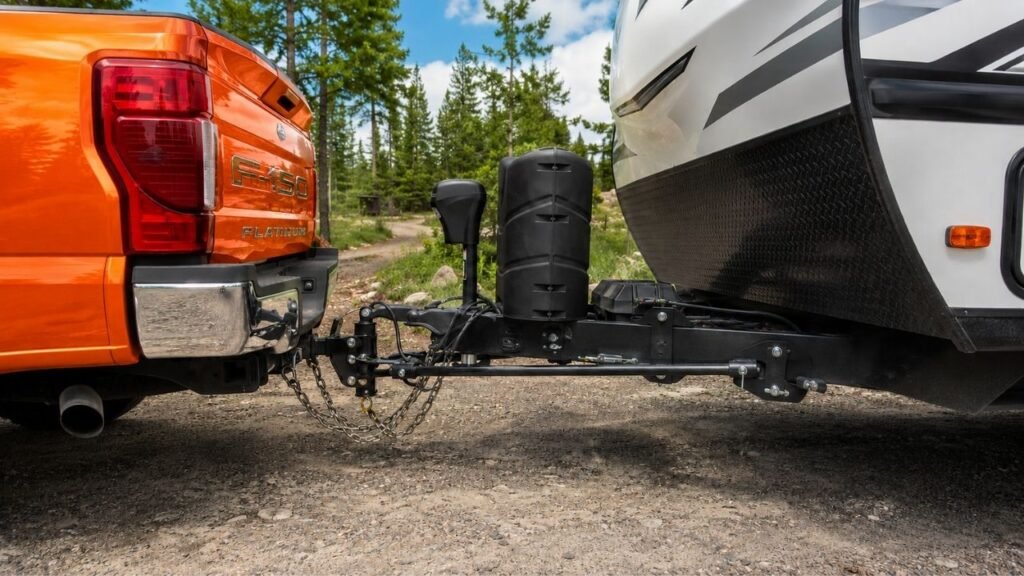
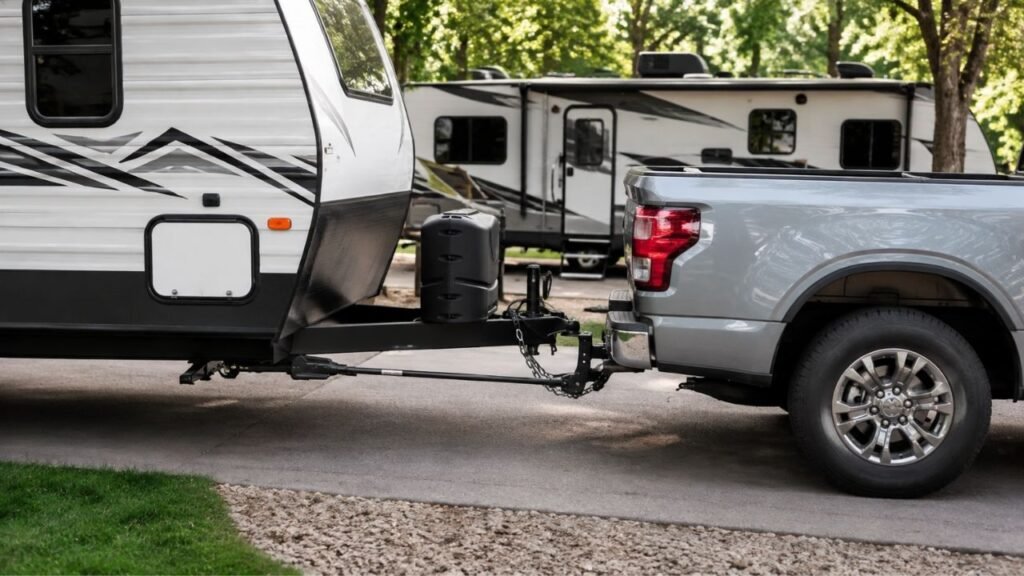
A traditional weight distribution hitch uses spring bars to distribute tongue weight. Some systems also include integrated sway control. Others use a completely separate friction sway-control bar.
Those components do not always have the same backing restrictions.
The problem also isn’t simply that your truck is moving backward.
Backing often involves sharper angles than normal forward driving. You may also cross dips, slopes, curbs, or steep driveway entrances.
Those situations can create more hitch articulation than ordinary highway driving.
So instead of thinking, “Can I put my truck in reverse?” ask yourself:
“Can my hitch safely move through the angle I’m about to create?”
That is the more useful question.
Which Weight Distribution Hitches Can You Back Up With?
Different weight distribution hitch designs behave differently while reversing. Before backing, identify your hitch and its sway-control setup.
| Hitch or Setup | Backing While Connected | Main Thing to Watch |
| Standard WDH without separate sway control | Usually allowed | Spring-bar and frame clearance |
| WDH with integrated sway control | Usually allowed | Extreme articulation |
| Equal-i-zer style system | Normal backing generally allowed | Significant grade transitions |
| Fastway e2 style system | Normal backing generally allowed | Severe driveway angle changes |
| Blue Ox weight distribution system | Normal backing generally allowed | Component clearance |
| Andersen weight distribution system | Normal backing generally allowed | Model-specific limits |
| WDH with separate friction sway bar | Depends on the sway-control device | Binding or bottoming out |
| Unknown or older hitch setup | Check before backing | Manufacturer restrictions |
The main takeaway is simple.
You cannot apply one universal backing rule to every hitch.
Two trailers may both have weight distribution hitches but use completely different sway-control designs.
If you recently bought a used trailer, identify your equipment first. Look for labels, model numbers, or manufacturer markings around the hitch head and spring bars.
Why Can Some Weight Distribution Hitches Back Up While Others Cannot?
Your hitch needs enough movement to follow the truck and trailer. Problems develop when one component reaches its movement limit before everything else.
How the Spring Bars Move During a Turn
Weight distribution spring bars create leverage between your tow vehicle and trailer.
That leverage transfers part of the trailer’s tongue weight forward. It helps restore weight to the tow vehicle’s front axle.
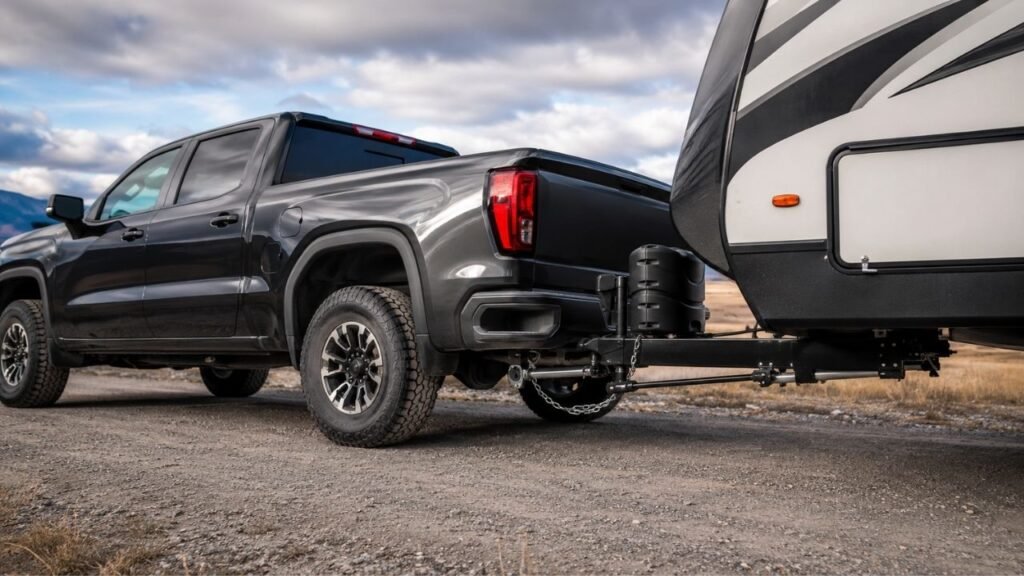
While turning, the truck and trailer no longer form a straight line.
One spring bar may move farther forward relative to its bracket. The opposite bar may move farther backward.
A properly designed hitch allows this normal movement.
That means spring bars do not automatically need removal during every turn.
Backing becomes concerning when the bars, brackets, chains, hitch head, or trailer frame approach their physical limits.
What Changes When the Trailer Is Reversing?
Reverse itself does not suddenly make weight distribution dangerous.
The biggest difference is how people normally maneuver while backing.
You may turn much more sharply while entering a campsite. You might make several quick steering corrections in limited space.
The trailer could also approach a jackknife position.
Those sharper angles create more articulation between the truck and trailer.
Backing can also happen over uneven surfaces. Campsites often have dips, sloped entrances, drainage channels, and raised parking pads.
Those conditions can place the hitch at unusual angles.
So reversing gets blamed for many problems that are really caused by excessive articulation.
Why Sway Control Changes the Answer
This is where many trailer owners become understandably confused.
A weight distribution hitch and a sway-control device are not always the same thing.
Some hitches use only weight distribution.
Others combine weight distribution with built-in sway control.
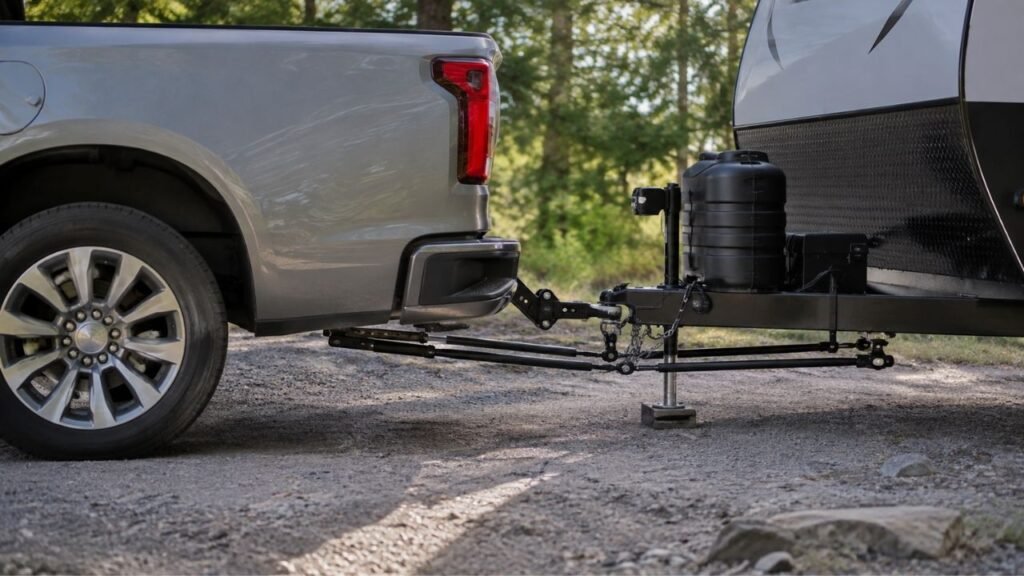
Another setup may use weight distribution spring bars plus a separate telescoping friction sway-control bar.
The integrated systems are commonly designed to operate during normal reversing.
A separate friction bar may have different limits.
That is why somebody else’s hitch advice may not apply to yours.
Weight Distribution Bars vs. Sway Control Bars: Do You Disconnect Both?
Spring bars and sway-control bars perform different jobs. Understanding that difference makes backing decisions much easier.
Weight Distribution Spring Bars
Spring bars are the main load-distributing components of your hitch.
They apply leverage between the trailer frame and hitch head. This helps distribute tongue weight across the tow vehicle’s axles.
You generally do not need to remove them simply because you selected reverse.
Many systems are specifically designed to turn and back while connected.
However, they still have mechanical limits.
If the maneuver creates severe horizontal or vertical articulation, disengaging weight distribution may become necessary.
Integrated Sway Control
Many newer hitches build sway resistance into the weight distribution system.
These systems may use friction at the hitch head, brackets, spring bars, or other contact points.
Examples include popular designs from Equal-i-zer, Fastway, Blue Ox, Andersen, and similar manufacturers.
Because sway control is integrated into the hitch, there usually isn’t a separate sway bar that must be removed before every backing maneuver.
Normal campsite reversing is generally expected.
You should still watch for excessive hitch angles and grade changes.
Separate Friction Sway Control Bars
A separate friction sway-control bar looks very different.
It is usually a smaller telescoping bar mounted beside the trailer coupler.
Its purpose is resisting rapid side-to-side trailer movement.
During a sharp backing maneuver, that bar can become excessively compressed or extended.
It may bottom out before your truck reaches its desired angle.
It could also contact the trailer frame, bumper, coupler area, or another hitch component.
Some manufacturers therefore require or recommend removing these friction devices before backing.
Here is the important distinction:
Removing a friction sway-control bar does not automatically mean removing your weight distribution spring bars.
They are separate components with separate jobs.
When Should You Disconnect the Weight Distribution Hitch Before Backing?
Normal reversing often requires no changes. Certain situations, however, deserve extra caution before you start moving.
Consider disconnecting or disengaging the required components when:
- Your hitch owner’s manual specifically requires disconnection.
- Your separate friction sway bar cannot safely handle reversing.
- You need an extremely sharp backing angle.
- Spring bars are approaching the trailer frame.
- Hitch components are contacting each other during articulation.
- You are crossing a sharp driveway grade transition.
- The trailer must pass through a deep drainage dip.
- Spring bars are approaching the pavement.
- A frame bracket is shifting under unusual load.
- Something feels mechanically stuck during the maneuver.
- A hitch component is already bent or damaged.
Do not remove components just because another camper does.
Your hitch design should determine your procedure.
Can You Back Up a Weight Distribution Hitch Around a Sharp Turn?
You may be able to make fairly sharp reverse turns with your weight distribution hitch connected. However, there is no universal safe turning angle for every hitch.
Some systems allow substantial articulation.
Others have components that reach their limits much sooner.
That is why rules such as “never turn past 45 degrees” are unreliable unless your manufacturer gives that exact restriction.
Instead, watch the actual hitch.
Pay attention to the spring bars, trailer frame, brackets, propane tray, tongue jack, chains, and sway-control equipment.
Stop before any component begins forcing another component out of position.
You should never use mechanical contact as your turning-angle indicator.
If something has already hit the frame, you went too far.
Can You Jackknife a Trailer With the Weight Distribution Bars Connected?
You should avoid intentionally forcing your trailer into an extreme jackknife position with the weight distribution bars connected.
A tight trailer angle is not automatically damaging.
Many hitches can handle considerable articulation during normal maneuvering.
The problem begins when the hitch reaches its mechanical travel limit.
At that point, a spring bar might contact the frame. A bracket could shift, or another component could become trapped.
A separate sway-control bar could also bottom out.
This can happen surprisingly quickly when backing into a narrow driveway.
Take the maneuver slowly and monitor the hitch.
If you cannot see the connection clearly, use a spotter.
Backing five extra times is cheaper than replacing damaged hitch components.
What About Backing Up a Steep Driveway With a Weight Distribution Hitch?
A steep driveway can create problems even when your truck stays almost perfectly straight. The concern here is vertical articulation rather than turning angle.
Why the Driveway Angle Matters
Imagine your trailer remaining on a level street.
Your truck begins climbing a steep driveway.
The truck and trailer are still pointing in almost the same direction horizontally.
However, vertically, they are now sitting at noticeably different angles.
That changes the forces acting on the hitch.
Spring bars can become heavily loaded as the tow vehicle climbs while the trailer remains lower.
A severe transition can also reduce ground clearance underneath the hitch.
This is why some hitch manufacturers recommend disengaging weight distribution before crossing significant grade changes.
Steep residential driveway entrances are a common example.
Signs the Grade Change Is Too Severe
Watch carefully when approaching a steep driveway or uneven campsite.
Possible warning signs include:
- Spring bars approaching the trailer frame.
- Spring bars getting unusually close to pavement.
- Hitch head clearance becoming extremely limited.
- Brackets appearing more heavily loaded than usual.
- The truck’s rear suddenly rising or dropping.
- Hitch movement stopping while trailer angle keeps changing.
- Unusually harsh binding during the transition.
Normal hitch creaking alone does not necessarily indicate trouble.
Visible interference is much more important.
Safer Way to Handle a Steep Driveway
Check your hitch manual before attempting a severe grade transition.
If weight distribution needs disengagement, reduce spring-bar tension correctly.
Using the trailer tongue jack can help relieve spring-bar loading before removal.
Do not wrestle a fully loaded spring bar off its bracket.
Stored tension can make careless removal dangerous.
Once the truck and trailer reach a more suitable position, reconnect the system according to its normal setup procedure.
How to Back Up Safely With a Weight Distribution Hitch Connected
You don’t need to make routine trailer backing complicated. A few checks before reversing can prevent most avoidable hitch problems.
1. Identify Your Hitch Setup
Know whether you have integrated sway control or a separate friction bar.
If you’re unsure, inspect the hitch before moving.
2. Check the Manufacturer’s Backing Instructions
Find the instructions for your specific model.
Do not rely entirely on generic trailer advice.
3. Remove Separate Sway Control When Required
If your friction sway-control device must come off before backing, remove it.
Do this before entering a tight maneuver.
4. Inspect Spring-Bar Clearance
Look at both spring bars and their mounting points.
Make sure nothing already sits unusually close to the frame.
5. Look at the Ground Ahead
Backing problems aren’t limited to turning.
Check for:
- drainage dips,
- steep driveway aprons,
- raised campsite pads,
- curbs,
- large potholes,
- uneven ground.
Knowing the terrain beforehand makes the maneuver much easier.
6. Back Slowly
Trailer backing rarely improves when you rush.
Move slowly enough that you can stop immediately.
7. Use Small Steering Corrections
Small corrections help prevent the trailer from reaching extreme angles quickly.
They also give you more time to watch the hitch.
8. Monitor Trailer Articulation
Keep track of the angle between truck and trailer.
Do not focus exclusively on the parking spot.
9. Use a Spotter When Necessary
A spotter can watch areas your mirrors cannot show.
Give your spotter one simple job: stop you before anything contacts.
10. Stop If Something Looks Wrong
Stop immediately if a bar binds, bracket moves, or component contacts another part.
Do not try pushing through resistance.
11. Reconnect Removed Components
Before returning to road travel, reinstall anything removed for backing.
Double-check pins, clips, brackets, and sway-control equipment.
Normal Hitch Noise vs. Signs You Should Stop Backing
Weight distribution hitches can make plenty of noise during turns. The goal is knowing when noise is normal and when something needs attention.
Creaking and Groaning Can Be Normal
Some hitches intentionally use friction for sway control.
That friction can produce:
- creaking,
- groaning,
- popping,
- scraping-type sounds.
These noises often become more noticeable during slow parking maneuvers.
Turning places different loads on each spring bar.
That can make a quiet highway hitch suddenly sound much louder.
Noise alone does not prove the hitch is binding.
Stop If You See or Hear These Warning Signs
Pause your maneuver if you notice:
- A sudden heavy metallic bang.
- A spring bar striking the trailer frame.
- A bracket visibly shifting.
- A friction sway bar reaching its travel limit.
- A chain becoming unusually tight.
- A hitch component touching the tongue jack.
- Mounting hardware moving from its normal position.
- A bar bending abnormally.
- Steering movement stopping because the hitch is trapped.
Whenever possible, visually inspect the hitch before continuing.
What Can Happen If You Back Up With the Wrong Hitch Setup?
Forcing a hitch beyond its intended movement can damage several components. Most problems are preventable by stopping before the system binds.
Possible damage includes:
- Bent friction sway-control bars.
- Damaged sway-control mounting balls.
- Shifted frame brackets.
- Bent spring bars.
- Damaged spring-bar retainers.
- Trailer-frame contact damage.
- Overstressed hitch-head components.
- Damaged receiver components.
- Bent sway-control mounts.
- Loosened mounting hardware.
You may not notice every problem immediately.
After a severe binding event, inspect the entire hitch before towing again.
Check whether brackets moved from their original positions.
Also check bars, pins, bolts, and mounting points carefully.
Do You Need to Remove Weight Distribution Bars Before Parking at a Campsite?
Usually, no.
Many campers back into ordinary campsites with weight distribution bars connected.
If your hitch allows normal backing, removing the bars before every campsite would create unnecessary work.
However, inspect the campsite entrance first.
A campsite with a deep drainage ditch or steep uphill pad could create significant vertical articulation.
A narrow site may also require an unusually sharp reverse angle.
In those cases, disengaging certain components may make sense.
Your hitch instructions should remain the deciding factor.
Should You Remove the Bars Before Backing Into a Driveway?
Not necessarily.
A flat driveway may require no special procedure beyond normal backing.
A steep driveway is different.
The biggest concern is often the transition between the street and driveway.
Your truck could begin climbing while the trailer remains flat.
That creates a significant vertical angle through the hitch.
Some manufacturers specifically warn against keeping weight distribution engaged during severe grade transitions.
So don’t judge the situation simply because you’re backing into a driveway.
Look at how sharply the ground changes.
A steep transition matters much more than the word “driveway.”
Quick Decision Guide Before You Put the Trailer in Reverse
You can use this table as a quick check before backing. Your exact hitch instructions should always override general guidance.
| Backing Situation | Usually Stay Connected? | What to Check |
| Straight backing on level ground | Yes | Normal hitch clearance |
| Gentle campsite maneuver | Usually | Spring-bar movement |
| Normal turn with integrated sway control | Usually | Hitch-specific limits |
| Separate friction sway bar installed | Check instructions | Binding and travel limits |
| Very tight reverse turn | Use caution | Frame and bar interference |
| Approaching jackknife position | Use caution | Mechanical travel |
| Flat street into steep driveway | Possibly disengage WD | Vertical articulation |
| Deep campsite dip | Possibly disengage WD | Spring-bar loading |
| Unknown hitch model | Don’t assume | Identify hitch first |
| Visible binding occurs | Stop | Inspect entire connection |
The Manufacturer’s Manual Matters More Than a General Backing Rule
There is no single backing rule covering every weight distribution hitch. Your exact model determines what can safely remain connected.
This matters because “weight distribution hitch” describes many designs.
One hitch may use steel spring bars resting on brackets.
Another may use chains.
Another could combine weight distribution and sway control differently.
Your friend saying, “I always leave mine connected,” does not guarantee your setup works the same way.
Try to identify:
- Hitch manufacturer.
- Exact model.
- Tongue-weight rating.
- Spring-bar rating.
- Sway-control type.
- Separate accessories installed.
Then follow the instructions for that configuration.
This is especially important with used trailers.
Previous owners may have installed components from different systems.
Do not assume every part belongs together simply because it was already installed.
Final Verdict
Yes, you can usually back up with a weight distribution hitch connected.
Routine reversing, gentle turns, and normal campsite backing are commonly acceptable with modern weight distribution systems.
You generally do not need to remove the spring bars just because you’re backing.
However, pay attention to the equipment you actually have.
Separate friction sway-control bars may require removal before reversing. Extreme jackknife angles can also create binding or physical interference.
Steep driveway transitions deserve special attention because they create vertical articulation.
If the hitch begins contacting, binding, or moving abnormally, stop immediately.
The safest approach is simple: know your hitch, watch your angles, and never force a component beyond its available movement.
Related FAQs
Can You Back Up With Weight Distribution Bars Attached?
Yes, you can usually back up with weight distribution bars attached if your hitch manufacturer allows it. Normal campsite reversing and moderate turns generally do not require removing the spring bars.
Do You Have to Remove Sway Bars When Backing Up?
It depends on the sway-control system. Integrated sway control commonly remains connected, while some separate friction sway-control bars should be removed before backing to prevent binding or damage.
Can You Turn With Weight Distribution Bars Attached?
Yes, weight distribution bars are designed to allow normal turning. However, extremely sharp turns can cause component interference, so always remain within your hitch’s allowed articulation range.
Can You Make a 90-Degree Turn With a Weight Distribution Hitch?
There is no universal 90-degree rule for weight distribution hitches. Some systems allow considerable articulation, but you should stop before any bar, bracket, sway-control device, or trailer component contacts another part.
Can You Back Up an Equal-i-zer Hitch Without Disconnecting It?
Normal backing is generally allowed with an Equal-i-zer hitch connected. However, significant grade transitions, such as entering a steep driveway from level pavement, may require disengaging weight distribution first.
Can You Back Up With a Fastway e2 Hitch?
Yes, normal backing is generally allowed with a Fastway e2 hitch connected. Severe grade transitions still deserve caution because they can create excessive vertical articulation through the hitch.
Can You Back Up With a Blue Ox SwayPro?
Yes, the Blue Ox SwayPro is generally designed to remain connected during normal backing. You should still monitor component clearance during unusually tight turns or uneven terrain.
Can You Back Up With an Andersen Weight Distribution Hitch?
Yes, Andersen weight distribution systems generally allow backing while connected. As with any hitch, follow your specific model instructions and avoid forcing components through extreme angles.
Why Does My Weight Distribution Hitch Pop When Backing Up?
Popping can come from normal friction and movement between heavily loaded hitch components. Stop and inspect the hitch if popping becomes unusually violent or comes with visible binding, shifting, or metal-to-metal contact.
Should Weight Distribution Bars Be Removed on a Steep Driveway?
They may need to be disengaged when crossing a severe driveway grade transition. The large vertical angle between truck and trailer can place unusual stress on the hitch, so follow your manufacturer’s instructions.

Ethan Walker writes about travel routes, outdoor exploration, and road-based adventures. His guides focus on simple planning, dependable gear, and realistic travel advice. He values comfort, safety, and practical experience over hype.