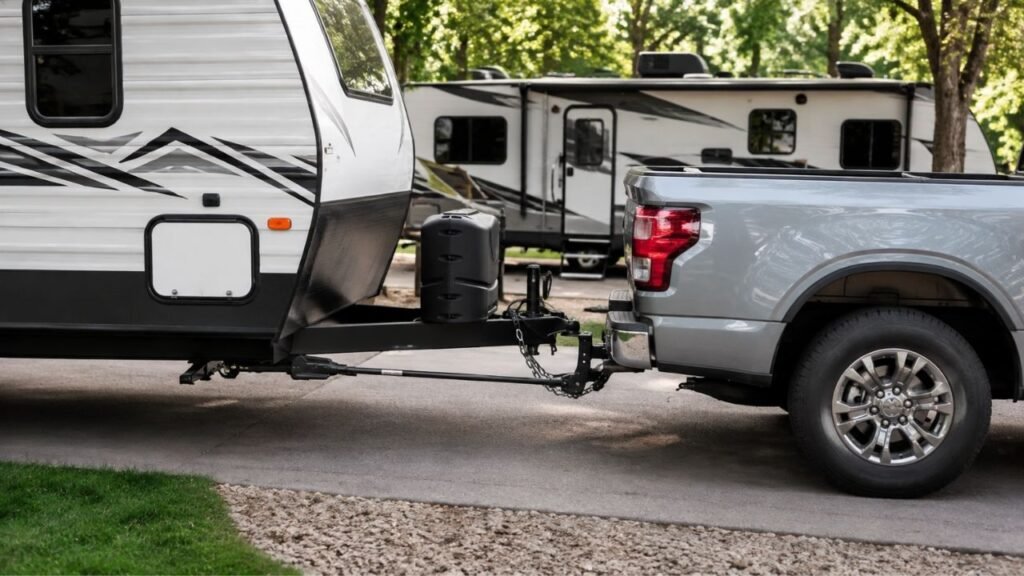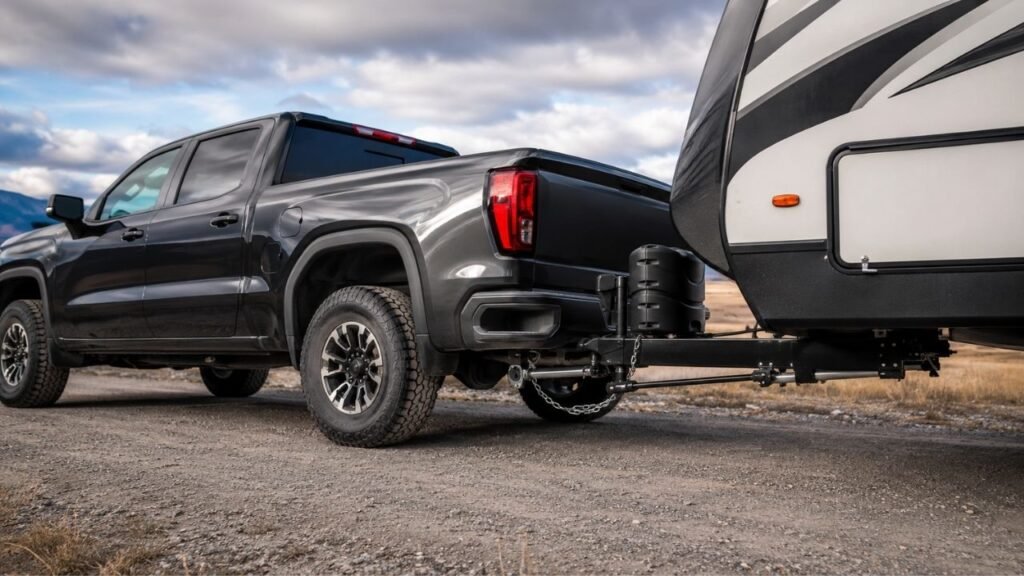
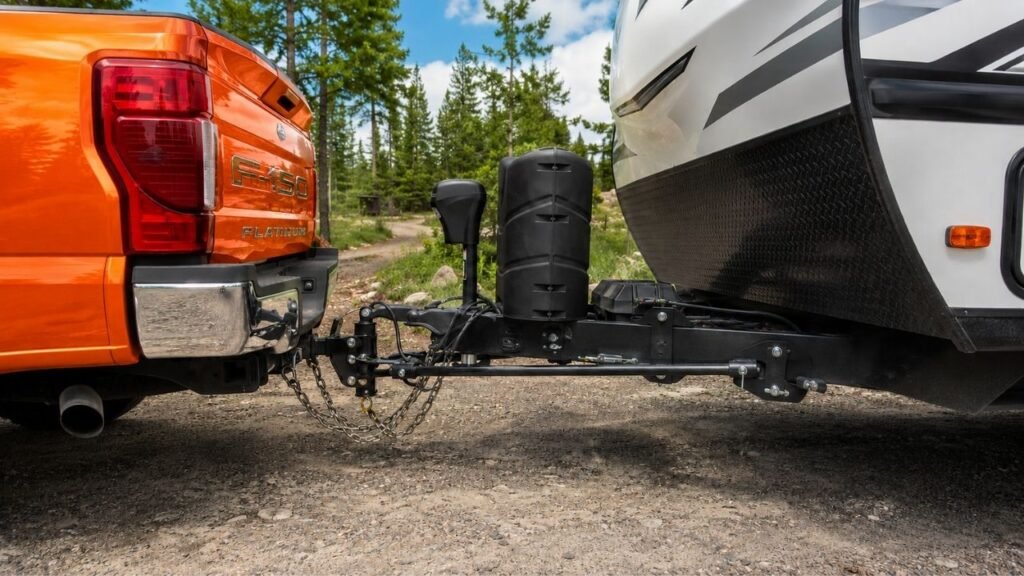
A weight distribution hitch often makes creaking, groaning, squeaking, or popping noises because heavily loaded metal parts move against each other. Friction-based sway-control hitches can be especially loud during slow turns. However, sudden banging, grinding, loose hardware, or a major change in sound should always be inspected.
In this guide, I’ll help you identify where the noise comes from. We’ll also cover what sounds are normal, what needs attention, and how to safely quiet your hitch without reducing its sway-control performance.
Key Takeaways
- Some creaking and groaning are normal on friction-based weight distribution hitches.
- Spring bars and sway-control brackets are common sources of hitch noise.
- Dry hitch balls and pivot points can cause noticeable squeaking.
- Popping can be normal, but repeated hard banging deserves inspection.
- Never grease friction sway-control surfaces unless your hitch manufacturer allows it.
- Loose brackets, damaged bars, or grinding noises should not be ignored.
- A sudden change in your hitch’s usual sound can signal a developing problem.
- Proper setup and regular maintenance can reduce unnecessary hitch noise.
Why Does a Weight Distribution Hitch Make So Much Noise?
Your hitch handles thousands of pounds while allowing your truck and trailer to move independently. During turns, bumps, and driveway transitions, several loaded parts must rotate or slide. That movement can create surprisingly loud sounds.
Spring Bars Rub Against the Sway-Control Brackets
This is one of the most common causes of weight distribution hitch noise.
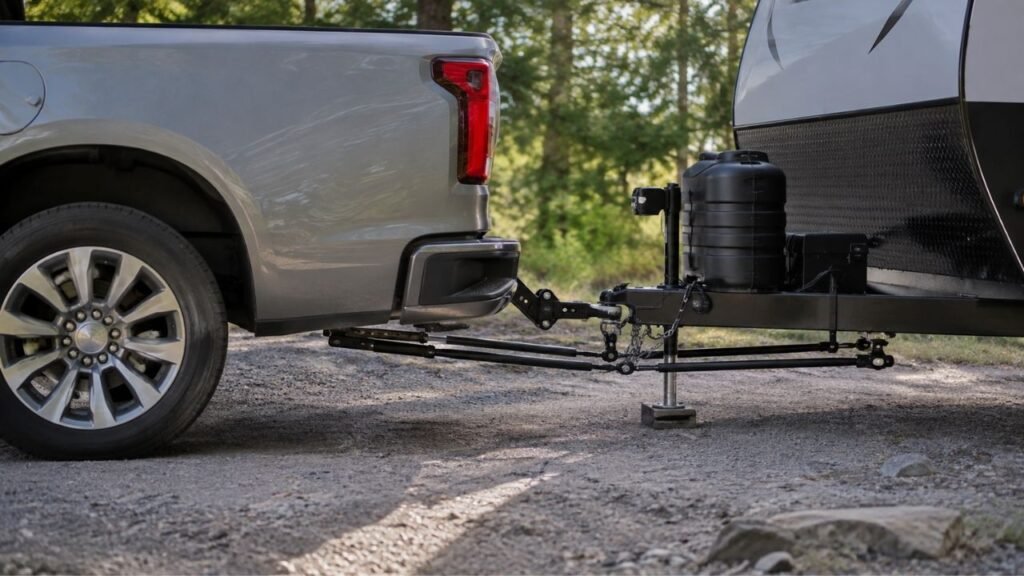
Many integrated sway-control hitches use friction between the spring bars and frame brackets. The bars remain under heavy downward pressure while resting on those brackets.
When your truck turns, the bars slide across their contact surfaces. That movement can create:
- Creaking
- Groaning
- Squealing
- Popping
- Scraping sounds
You may notice these noises most around campgrounds or gas stations. Slow, tight turns usually create more friction than straight highway travel.
On these hitch designs, some noise is simply part of operation.
However, not every weight distribution hitch uses this system. That distinction matters when deciding whether your noise is normal.
Spring-Bar Sockets and Hitch-Head Pivots Move Under Heavy Load
The spring bars also move where they connect with the hitch head.
Depending on your hitch, these connections may use sockets, trunnions, pivots, bearings, or similar components. They rotate slightly whenever the truck and trailer change angles.
Imagine turning into a sloped campground entrance.
Your truck may be turning left while climbing. Meanwhile, the trailer remains lower and approaches from another angle.
The hitch must accommodate all that movement.
Dry or dirty pivot points can make this movement much louder. You might hear creaking, squeaking, or a deep groaning sound.
Some of these locations require lubrication. Others may not.
Always follow the instructions for your specific hitch.
The Trailer Coupler Moves Against the Hitch Ball
Sometimes the noise blamed on the weight distribution system comes from the hitch ball.
The trailer coupler constantly moves around the ball during towing. Even minor turns require movement between these two metal surfaces.
A dry hitch ball can produce an annoying squeak.
Noise can become worse when the ball has:
- Little or no grease
- Surface rust
- Road grit
- Hardened old grease
- Abnormal wear
- Coupler damage
A dirty ball can also make fresh grease less effective.
Clean old contaminants away before applying approved lubricant.
You should also verify that the hitch ball matches your trailer coupler.
Hitch Setup Can Increase the Noise
Some hitches are naturally noisy, but poor adjustment can make things worse.
The spring bars need to sit correctly. The hitch head needs the proper angle, and the frame brackets need the correct position.
Potential setup problems include:
- Incorrect hitch-head angle
- Improper bracket height
- Bars sitting incorrectly
- Uneven spring-bar loading
- Excessive spring-bar tension
- Insufficient spring-bar tension
- Improperly positioned frame brackets
- Major changes in trailer loading
Noise alone does not prove your hitch is adjusted incorrectly.
Still, if the hitch suddenly becomes much louder after an adjustment, I would recheck the setup.
Loose Hardware Can Create Clunks and Sharp Pops
Creaking is very different from a hard metallic clunk.
A clunk usually means something has enough clearance to move suddenly.
Possible locations include:
- Hitch-head hardware
- Frame brackets
- Hitch pin
- Receiver
- Shank
- Spring-bar retainers
- Coupler
- Pins and clips
Some receiver movement is common because the shank needs enough clearance to slide into the receiver.
However, excessive movement can produce repeated clunking when you accelerate, brake, or change direction.
Loose structural hardware deserves more attention.
Do not simply add grease and hope the noise disappears.
Dirt, Rust, and Old Grease Can Make Moving Parts Noisier
Your hitch sits in one of the dirtiest locations on your entire towing setup.
It gets exposed to:
- Rain
- Dust
- Road salt
- Sand
- Mud
- Gravel dust
- Moisture
- Temperature changes
Old grease can collect dirt and become thick.
Instead of helping parts move smoothly, contaminated grease can turn into an abrasive paste.
Surface rust may also increase friction after the hitch sits unused.
Regular cleaning can prevent many unnecessary noises.
A New Hitch May Be Louder During Break-In
A brand-new friction-style hitch may sound louder during its first trips.
Its contact surfaces are still wearing into their normal operating pattern. You may notice the sound changes slightly after repeated use.
That does not mean every loud noise is harmless break-in noise.
Deep grinding, severe gouging, bent components, or shifting brackets still require inspection.
If something looks wrong, don’t wait for it to “break in.”
What Do Different Weight Distribution Hitch Noises Mean?
The type of sound often gives you the best starting point. Instead of treating every hitch noise the same, listen carefully to what you actually hear and when it happens.
| Hitch Sound | Most Likely Source | Usually Normal? | What to Check First |
| Creaking | Spring bars, brackets, hitch pivots | Often | Bar position and approved lubrication points |
| Groaning | Friction sway-control surfaces | Often during turns | Spring bars and frame brackets |
| Squeaking | Hitch ball or dry pivot | Sometimes | Ball, sockets, pivots, and grease |
| Popping | Spring bars shifting under load | Sometimes | Bars, brackets, and hitch head |
| Clunking | Receiver play or loose connection | Needs checking | Hitch pin, receiver, coupler, and hardware |
| Grinding | Binding, contamination, or severe wear | Usually not | Stop and inspect moving parts |
| Sharp bang | Loose or shifting component | Not something to ignore | Brackets, spring bars, pins, and hardware |
| Rattling | Receiver play, pins, chains, or accessories | Usually fixable | Loose components around the hitch |
Pay particular attention when an established sound changes.
A hitch that has groaned during turns for years is different from one that suddenly starts producing a hard bang.
Changes often tell you more than volume alone.
Is It Normal for a Weight Distribution Hitch to Creak and Pop?
Yes, creaking and occasional popping can be normal on many weight distribution hitches. Friction-based sway-control systems are especially likely to make noise because resistance between loaded components is part of how they help control trailer movement.
You may notice more noise while:
- Turning sharply
- Backing into a campsite
- Entering a driveway
- Crossing uneven pavement
- Pulling through a gas station
- Maneuvering slowly around a campground
Those situations create large angles between your truck and trailer.
The hitch components must move while still carrying heavy loads.
That creates friction.
However, I would not use the common statement that “a noisy hitch means it is working” as a universal rule.
Different weight distribution systems work differently.
Some designs are intentionally built for quieter operation. On those systems, loud squeaking or grinding may deserve more investigation.
The best reference is always the operating behavior described by your hitch manufacturer.
Why Is My Weight Distribution Hitch So Loud When Turning?
Your hitch usually becomes louder during turns because the truck and trailer are rotating in different directions while the spring bars remain under tension.
On friction-style systems, those bars slide across their sway-control surfaces.
A tighter turn creates more movement.
That is why a slow 90-degree campground turn may produce more groaning than several hours of straight interstate towing.
Sloped driveways can make the sound even stronger.
Now the hitch is dealing with several movements at once.
The truck may turn, climb, and roll slightly while the trailer approaches from another angle.
That puts the hitch through greater articulation.
A loud creak during that movement can sound alarming even when nothing is damaged.
Still, check the system if the sound changes into grinding, hard impacts, or repeated banging.
Why Does My Weight Distribution Hitch Pop When Backing Up?
Backing can create sharper hitch angles than ordinary forward towing. As those angles change, spring bars and other loaded components may shift slightly and release stored tension.
That can create a pop.
You might hear it when:
- Beginning a sharp reverse turn
- Straightening the trailer
- Crossing uneven ground
- Switching from forward to reverse
- Backing onto a sloped campsite
Some receiver movement can also change direction when you reverse.
That can sound like a clunk or pop.
Before assuming the sound is harmless, inspect your brackets and spring bars. Make sure nothing has shifted and all retaining hardware remains secure.
You should also check your hitch instructions before backing through tight turns.
Some integrated sway-control systems allow normal backing. Separate friction sway controls and other designs may have different restrictions.
There is no universal backing rule for every hitch.
How Can I Find Where the Hitch Noise Is Coming From?
Finding the exact source saves you from randomly greasing or tightening parts. Start by paying attention to when the noise happens, then inspect the hitch while everything is safely parked and unloaded.
1. Notice Exactly When the Noise Happens
First, don’t focus only on the sound.
Focus on the situation.
Ask yourself whether it happens while:
- Turning
- Backing
- Braking
- Accelerating
- Crossing bumps
- Entering driveways
- Driving straight
A squeak only during turns suggests something different from a clunk every time you brake.
Write the pattern down if necessary.
That simple observation can narrow your search quickly.
2. Inspect the Hitch With the Trailer Safely Parked
Park on a firm surface.
Set the parking brake and chock the trailer wheels.
Before handling spring bars, release their stored tension using the procedure specified by your hitch manufacturer.
Weight distribution bars can hold tremendous force.
Keep your hands and body away from pinch points.
Never loosen major hitch components while the system remains under uncontrolled spring-bar tension.
3. Look for Fresh Metal Contact Marks
Noise often leaves visible evidence.
Look closely around moving surfaces for:
- Fresh shiny metal
- Metal dust
- Deep scratches
- Unusual grooves
- Chipped paint
- Rust rubbed away
- Metal shavings
Normal friction surfaces may show polished contact areas.
What concerns me more is fresh damage somewhere that should not be rubbing.
Deep gouges and metal shavings deserve investigation.
4. Check the Spring Bars and Frame Brackets
Make sure both bars are seated correctly.
Check the frame brackets for movement.
Look for:
- Bent parts
- Cracks
- Uneven wear
- Loose bolts
- Missing clips
- Shifted brackets
- Damaged pins
Compare both sides.
If one side looks dramatically different from the other, find out why.
5. Check the Hitch Ball and Coupler
Inspect the ball for abnormal wear or damage.
Then look inside the coupler if you can safely see it.
Confirm that:
- The ball size is correct
- The coupler fully seats
- The latch closes properly
- Required lubrication is present
- Nothing appears cracked or distorted
A dry or badly worn ball can create plenty of noise.
6. Check the Hitch Head, Shank, and Receiver
Now work backward toward the truck.
Check the hitch head for anything loose or damaged.
Inspect the shank and receiver for:
- Excessive movement
- Elongated holes
- Loose fasteners
- Cracks
- Bent steel
- Damaged hitch pins
Some clearance between the shank and receiver is normal.
Excessive slop, however, can create clunking whenever the towing load changes direction.
Should You Grease a Noisy Weight Distribution Hitch?
Yes, many weight distribution hitches need lubrication. The important question is not simply whether you should grease the hitch. You need to know exactly where your particular hitch allows grease.
Areas That Commonly Require Lubrication
Depending on the hitch design, approved lubrication points may include:
- Hitch ball
- Spring-bar sockets
- Trunnion ends
- Hitch-head pivots
- Cam bearings
- Manufacturer-provided grease fittings
These are only examples.
Your exact hitch may use different components.
Follow its maintenance instructions rather than copying lubrication points from another brand.
Too little lubrication can increase noise and wear.
Lubrication in the wrong location can create a different problem.
Areas You Should Not Automatically Grease
Be cautious around any surface that provides friction-based sway control.
That may include:
- L-brackets
- Spring-bar friction surfaces
- Friction pads
- Separate sway-control friction surfaces
- Specialty polymer contact surfaces
Greasing an intended friction surface can reduce the resistance that the hitch depends on for sway control.
That is why I would avoid blanket advice like “grease every metal contact point.”
I would also avoid saying that brackets should never receive lubricant under any circumstances.
Hitch designs vary.
The safest rule is simple:
Never lubricate an intended sway-control friction surface unless the manufacturer of your exact hitch specifically permits it.
How Do You Quiet a Noisy Weight Distribution Hitch Safely?
You can often make a hitch quieter without interfering with its operation. The key is fixing unnecessary noise while leaving intentional sway-control friction alone.
Clean the Hitch Before Adding New Grease
Start with cleaning.
Wipe old grease away from approved lubrication areas.
Remove dirt, grit, and contaminated lubricant.
Adding fresh grease directly over dirty old grease can trap abrasive material against moving metal.
Cleaning also gives you a better chance to inspect the parts.
Look for cracks, heavy wear, and unusual scoring while you work.
Lubricate Only Manufacturer-Approved Locations
Once everything is clean, apply the recommended lubricant where specified.
Use the correct amount.
More grease is not automatically better.
Excess lubricant can attract road dirt and spread onto areas where you don’t want it.
If your hitch includes grease fittings, follow its normal maintenance procedure.
Never move grease from an approved pivot onto nearby friction sway-control surfaces just because those surfaces are noisy.
Make Sure the Spring Bars Sit Correctly
Look at both spring bars after hitching.
They should sit where the manufacturer designed them to sit.
An improperly seated bar may:
- Rub at an unusual angle
- Contact the bracket incorrectly
- Shift during turns
- Produce additional popping
If one side behaves differently from the other, inspect both positions carefully.
Recheck Weight-Distribution Adjustment
A hitch can make more noise when its geometry is wrong.
Review the setup if you recently changed:
- Hitch-head angle
- Bracket position
- Trailer loading
- Spring bars
- Tow vehicle
- Hitch height
Check your tow vehicle’s front-end measurements and the manufacturer’s setup procedure.
Do not use noise alone to decide whether you need more or less spring-bar tension.
Proper weight distribution should be based on measurements and specifications.
Recheck Frame-Bracket Position and Hardware
Frame brackets should stay where they were installed.
If one has walked along the trailer frame, the spring-bar geometry may change.
That can affect both noise and hitch performance.
Inspect fasteners for movement.
If torque checks are required, use the manufacturer’s specified values and procedure.
Do not guess at torque settings.
Confirm the Spring Bars Match Your Loaded Tongue Weight
Spring bars should match the trailer’s real towing condition.
That means considering loaded tongue weight rather than relying only on the advertised dry tongue weight.
Your trailer may carry:
- Propane
- Batteries
- Food
- Water
- Camping equipment
- Tools
- Cargo
Those items can change tongue weight significantly.
Incorrectly selected spring bars can affect ride quality, adjustment, and hitch behavior.
If you suspect a mismatch, confirm the actual loaded tongue weight.
Use Noise-Reduction Accessories Only When Approved
Some hitch manufacturers offer pads, jackets, or similar components designed to reduce noise.
These products can be useful because they were developed around that hitch’s sway-control system.
Avoid making your own friction pads or installing random plastic between loaded surfaces.
Something that makes the hitch quieter may also change how those surfaces interact.
Use accessories specifically approved for your hitch.
Address Receiver Rattle Separately
Sometimes the weight distribution system isn’t causing the annoying clunk at all.
The shank may be moving inside the tow vehicle’s receiver.
If that is the source, a properly rated and compatible anti-rattle solution may help.
Keep the problems separate.
An anti-rattle device may reduce receiver movement.
It will not stop normal spring-bar friction noise farther back.
When Is Weight Distribution Hitch Noise a Warning Sign?
Most routine creaking isn’t an emergency. Certain noises and physical changes, however, deserve immediate attention. I would inspect the hitch before continuing to tow if you notice any of these signs.
- A sudden loud bang that never happened before
- Grinding during normal hitch movement
- Fresh metal shavings around the hitch
- Deep gouges or severe scoring
- A cracked spring bar
- A visibly bent spring bar
- A frame bracket that has shifted
- Missing pins or retaining clips
- Loose hitch-head hardware
- A damaged or severely worn hitch ball
- A coupler that does not stay securely latched
- New or worsening trailer sway
- A sudden steering change
- Unusual braking behavior
- Binding during ordinary turns
- Visible cracks in the hitch, shank, receiver, or brackets
If you find one of these problems, don’t try to hide the symptom with grease.
Find the mechanical cause first.
A quieter damaged hitch is still a damaged hitch.
Does a Louder Weight Distribution Hitch Mean Better Sway Control?
No, a louder hitch does not mean you have better sway control.
I understand why people make that connection.
A friction-based hitch can produce noise because its sway-control surfaces are creating resistance. So some normal groaning may happen while that system works.
But the volume itself tells you very little.
A hitch could become louder because of:
- Dirt
- Rust
- Dry pivots
- Poor adjustment
- Wear
- Loose hardware
Some effective sway-control systems are also designed to operate much more quietly.
Use proper setup, manufacturer specifications, and towing behavior to judge performance.
Don’t judge sway control by how loudly the hitch complains in a parking lot.
Are Some Weight Distribution Hitches Naturally Quieter Than Others?
Yes. Weight distribution hitches use different mechanical designs, so their normal sound levels can vary considerably. Understanding your system helps you decide whether a particular noise is expected.
| WDH Design | Typical Noise Level | Why |
| Friction-on-bracket integrated sway control | Often louder | Loaded metal surfaces slide during turns |
| Chain-based systems | Often quieter | Less direct spring-bar friction at frame brackets |
| Cone-style systems | Usually designed for quieter operation | Sway resistance works differently |
| Basic WDH without integrated friction sway control | Varies | Pivots and hitch ball can still make noise |
| Cam or bearing systems | Varies by design | Maintenance and contact surfaces differ |
This is why comparing one hitch directly with your campground neighbor’s hitch can be misleading.
Their system may use a completely different way of distributing weight or controlling sway.
Learn what is normal for your specific model.
That gives you a much better baseline for troubleshooting.
Why Did My Hitch Suddenly Get Louder Than Before?
A sudden change deserves more attention than a hitch that has always made the same predictable noises. Something in the setup, lubrication, loading, or hardware may have changed.
Possible causes include:
- Lubrication has worn away
- Dirt has contaminated a pivot
- Rain washed exposed grease away
- Surface rust developed during storage
- Trailer loading changed
- Tongue weight changed
- Frame brackets shifted
- Hardware loosened
- Spring-bar adjustment changed
- A component developed wear
- The hitch is operating at a different angle
- The receiver has developed additional play
- Another nearby trailer component is making the noise
Start with whatever changed recently.
Did you load a generator into the front storage compartment?
Did you adjust the hitch?
Was the trailer stored outside for several months?
Did the sound appear immediately after a long rainy trip?
These clues can save you plenty of troubleshooting time.
If nothing obvious changed, inspect the complete hitch before your next trip.
How Can You Keep Hitch Noise From Getting Worse?
A little routine maintenance goes a long way here. You probably won’t make every friction-style hitch silent, but you can prevent normal noise from turning into wear-related noise.
- Inspect the hitch before towing.
- Keep approved pivot areas properly lubricated.
- Remove contaminated grease before applying fresh lubricant.
- Keep required friction surfaces clean and dry.
- Inspect spring bars for abnormal wear.
- Look for bracket movement.
- Check pins and retaining hardware.
- Follow required fastener inspection intervals.
- Recheck setup after major cargo changes.
- Inspect the hitch after unusually rough trips.
- Protect removable components during long storage periods.
- Deal with rust before it becomes heavy.
- Investigate any sudden change in sound.
You don’t need to become obsessed with every little creak.
Just learn your hitch’s normal behavior.
Once you know its usual sounds, unusual ones become much easier to notice.
Final Words
A noisy weight distribution hitch is not automatically a bad hitch. Friction-based systems can make surprisingly loud creaks, groans, squeaks, and pops, especially during slow turns and uneven driveway transitions.
What matters is understanding where the sound comes from. Keep approved moving points clean and lubricated, leave required sway-control friction surfaces alone, and periodically inspect your bars, brackets, hitch head, coupler, and receiver.
Most importantly, pay attention when the sound changes.
If normal creaking becomes hard banging or grinding, or you notice shifted hardware, damaged parts, sway, or handling changes, inspect the system before towing again.
Related FAQs
Is It Normal for a Weight Distribution Hitch to Make Noise?
Yes, some noise is normal, especially on friction-based weight distribution hitches. Creaking and groaning often occur during slow turns because loaded spring bars move across sway-control surfaces. However, grinding, severe banging, or a sudden new noise should be inspected.
Why Does My Weight Distribution Hitch Creak When Turning?
Turning changes the angle between your truck and trailer while the spring bars remain under heavy tension. On friction-style hitches, the bars and sway-control surfaces move against each other, which can create noticeable creaking or groaning.
Why Does My Weight Distribution Hitch Make a Popping Sound?
Popping may occur as spring bars, brackets, pivots, or receiver components shift slightly under changing loads. Occasional popping can be normal, but repeated hard pops deserve inspection for loose brackets, hardware, or excessive movement.
Can I Grease My Weight Distribution Hitch Bars?
It depends on your hitch design and the specific contact point. Some spring-bar pivots need lubrication, while friction surfaces used for sway control should often remain ungreased. Follow the maintenance instructions for your exact hitch.
Should I Grease the Hitch Ball on a Weight Distribution Hitch?
Many conventional steel hitch balls require grease to reduce friction and wear between the ball and trailer coupler. Clean away old contaminated grease first and follow the ball or hitch manufacturer’s lubrication recommendations.
Why Is My Equal-i-zer Hitch So Noisy?
Equal-i-zer-style hitches use loaded friction surfaces as part of their integrated sway-control system, so creaking and groaning during turns can be normal. Proper lubrication of approved hitch-head locations can reduce unnecessary noise without eliminating required sway-control friction.
Does Weight Distribution Hitch Noise Go Away After Break-In?
Some new friction-based hitches may become somewhat quieter as their contact surfaces settle into normal wear patterns. However, you should not expect all operational noise to disappear, especially during tight turns.
Why Is My Weight Distribution Hitch Louder When Backing Up?
Backing often creates sharper angles between the tow vehicle and trailer. Spring bars, pivots, brackets, and receiver components may move more than they do during straight towing, creating louder creaks, pops, or clunks.
Can Too Much Tension Make a Weight Distribution Hitch Noisy?
Incorrect spring-bar tension can affect hitch geometry and may contribute to unusual noises. However, noise alone cannot tell you whether the hitch is over-adjusted. Use the manufacturer’s setup measurements and tow-vehicle specifications.
Can I Tow With a Weight Distribution Hitch That Is Grinding?
You should inspect a grinding weight distribution hitch before continuing to tow. Grinding can indicate binding, contamination, severe wear, or damaged components, especially when the sound suddenly appears or becomes progressively worse.

Ethan Walker writes about travel routes, outdoor exploration, and road-based adventures. His guides focus on simple planning, dependable gear, and realistic travel advice. He values comfort, safety, and practical experience over hype.